



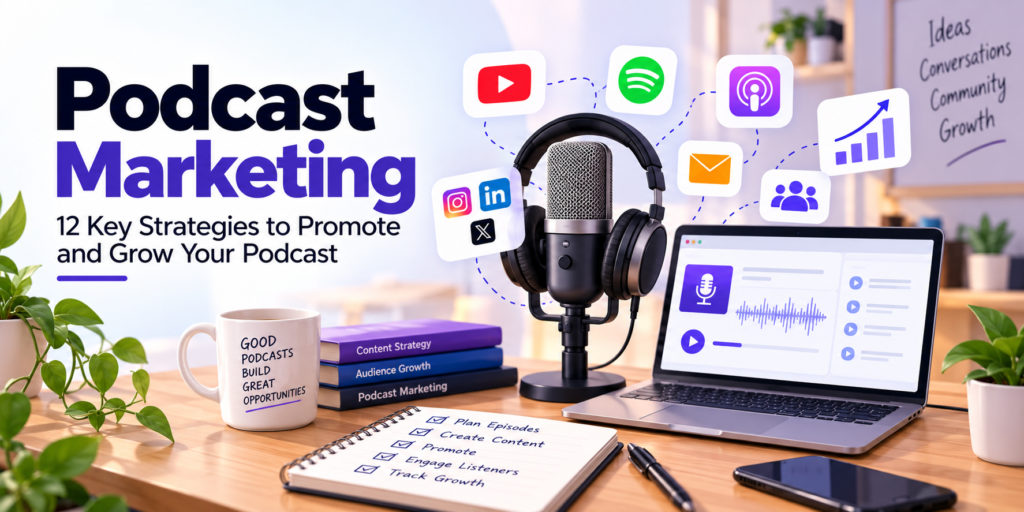
The right promotion can help listeners find your podcast, see what it’s worth, and come back for more episodes later on. These can be supported by search, video, social media, email, and guest collaborations.
In this blog, we’ll walk through 12 practical ways you can market your podcast, draw the right listeners, and establish a devoted following.
12 Podcast Marketing Strategies to Grow Your Audience
A podcast isn’t built overnight. It needs a clear plan to draw in new listeners, to keep them coming back, and to form durable relationships with your audience. Every strategy helps a specific moment in the podcast growth journey, from making you easier to find in search results to cross promoting your episodes across different channels.
Here are 12 actionable ways to get your podcast out there and marketed properly-
1. Know What Your Podcast Is About & Who It Is For
Before marketing your podcast, identify your target audience, and decide what you want your listeners to gain from each episode. Having a clear purpose will make it easier to choose relevant podcast topics and it will also communicate the value each episode will offer to the listeners.
Strategy 1: Find Your Target Listener

Start by determining who your podcast is trying to serve. A wide audience like “business professionals” doesn’t help much. A specific group, such as first-time managers having tough conversations at work, is a more focused topic area.
Here’s how to understand your audience-
- Identify Frequent Problems: Answer the questions your potential listeners want answered.
- Check out Their Interests: See what themes, formats & shows they already follow.
- Make a Clear Promise: Tell them what they will learn from your podcast.
- Request Feedback: Go out there and talk to your target audience & use their feedback to refine your strategy.
Strategy 2: Create a Consistent Podcast Identity
Your podcast name, artwork, description, and host information should be consistent across platforms. New visitors should quickly understand what the podcast is about and why it is relevant to them.
Also make sure the first episode is easy to access. A short trailer can hook people, introduce the host, explain the complete concept and give a quick glimpse of the themes to come.
Quick checklist:
- Write a clear, benefit-focused podcast description.
- Use consistent artwork and display information.
- Find a good opening episode.
- Ask a new visitor whether the show description makes sense.
A consistent identity gives your other podcast promotion strategies a stronger foundation.
2. Improve Podcast Discovery Through Search and Video
People need a good reason to click an episode. Good titles, useful episode pages, and the right video formats may get your material out to listeners who aren’t already listening.
Strategy 3: Pick Topics Based on Real Search Questions
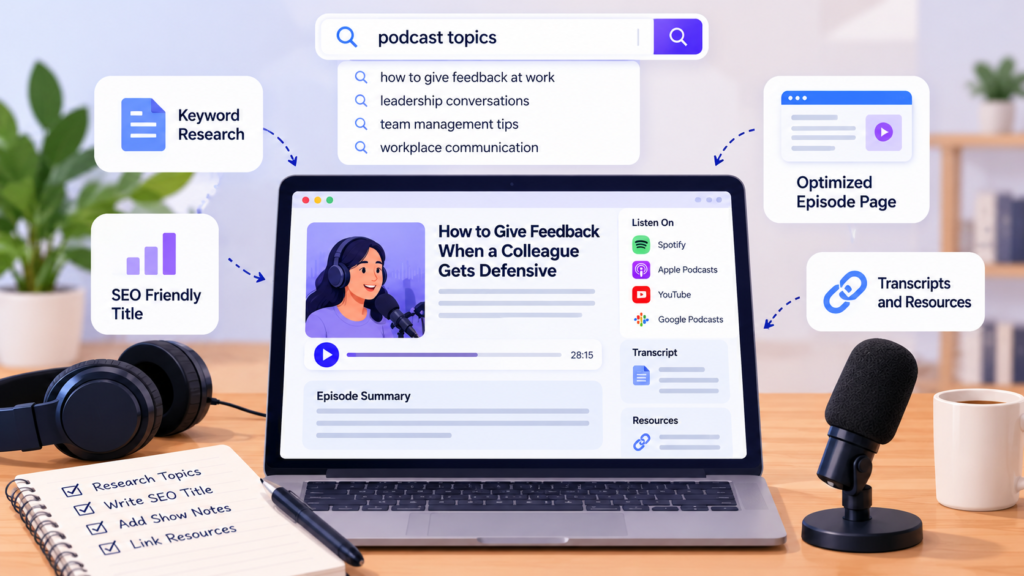
Create episodes that answer questions your audience already has. Examine audience communications, industry debates, interviews and related search results for pertinent topics.
For example, “How to Give Feedback When a Colleague Gets Defensive” tells the listener more about the value of the program than “Leadership Chat, Episode 14.”
When planning titles, follow these practices:
- Include the central topic naturally.
- Stick to one simple inquiry or problem.
- Write descriptions that explain what listeners will learn.
- Include names of guests when they give useful context.
Relevant subjects can help your podcast SEO, making each episode more discoverable and also easier to understand for the people who actually search it.
Strategy 4: Create Useful Episode Pages
An episode page tells listeners what the episode is about, the key takeaways and the resources before they listen. Include an episode summary, player or platform links, descriptive subheadings, and an edited transcript.
Include links to research, references & resources discussed in the episode. These additions help the listeners to explore the topic further, evaluate the information & decide whether the episode is relevant to their interests or not.
Follow Google’s guidelines for useful, credible content. Make sure your content is factual and useful to the reader.
If you’d like some further ideas, check out Airmeet’s strategy for creating a branded podcast audience.
Strategy 5: Publish Full Episodes on YouTube
YouTube can help people find your podcast via search, recommendations, and video browsing. Organizing full episodes into a dedicated playlist makes it easier for viewers to find and explore your podcast content.
YouTube’s podcast guidance suggests full episodes be organized in a dedicated public playlist for each show.
Here are a few things you can do to help grow your channel-
- Upload full episodes to the right playlist
- Write clear, descriptive titles and descriptions
- Add chapters to help people find specific topics
- Don’t mistake preview clips for whole episodes
- Choose a video format your team can manage
For better presentation and discoverability of your episode, you can also refer to YouTube’s podcast content guide.
3. Turn Promotional Content Into Listening Sessions
Social media, guest referrals, and partnerships can help expose your podcast to new listeners. Make each piece of promotional material have a specific function and link it to the most closely related full episode.
Strategy 6: Make Short Clips From Every Episode
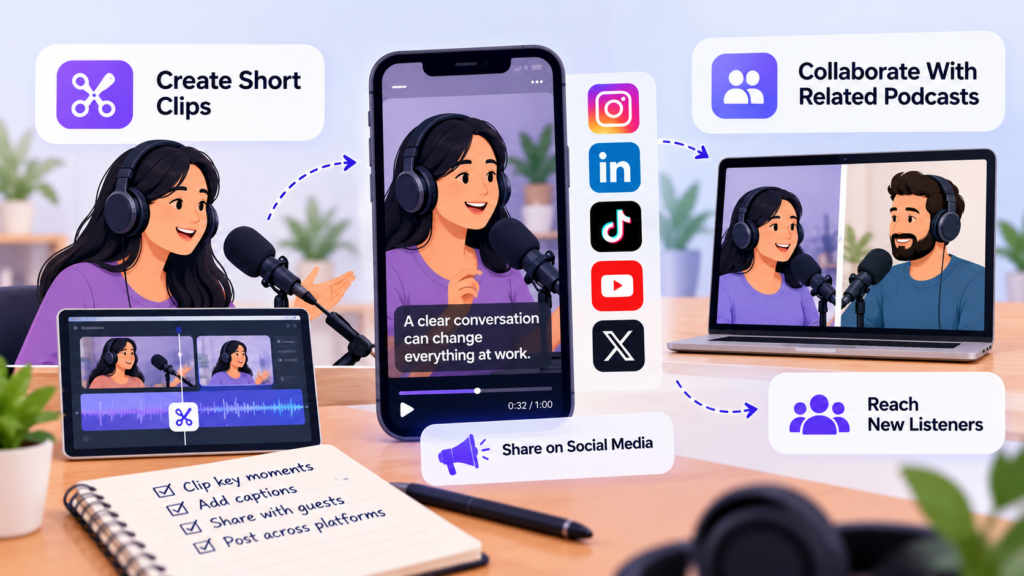
An effective promotional clip starts with a clear topic, then gives a useful insight or example. It should also give viewers a reason to watch or listen to the full episode. Keep each clip focused on one idea, use accurate captions, and identify speakers clearly when the conversation shifts between participants.
Think with Google suggests taking long-form podcast content and turning it into shorter snippets that can be shared on video and social channels.
Strategy 7: Give Guests a Ready-to-Share Kit
Your show could be exposed to audiences who trust your guests’ opinions. Prepare a sharing kit so guests can help promote the episode as soon as it goes live.
You can also include a direct episode link, a short clip of the guest, an approved social image, a customized caption and a short synopsis of the major takeaways from the chat.
Invite guests to tweak the materials to match their own voice and share on their platform of choice. This makes promotion easier and also helps in making the podcast reach to new listeners who are interested in the topic.
Strategy 8: Collaborate With Complementary Podcasts
Collaborating with other podcasts that have a comparable audience can bring your program to listeners who are interested in your area. Select shows with topics that are complementary to yours and allow you to provide ideas that are relevant.
A management podcast, for instance, may team up with a workplace coaching show. Both podcasts can attract listeners interested in professional growth.
Here are four strategies to develop productive podcast partnerships:
- Listen to a couple of episodes before you reach out to the host.
- Suggest a guest appearance or a fresh topic angle.
- Agree on what the campaign will be about, when it will go out and in what form.
- Read the audience feedback before scheduling the next partnership.
For more ideas, see Airmeet’s post on how to promote your brand using podcasts.
Strategy 9: Test Paid Promotion With a Clear Budget
Paid advertising can help you determine whether an episode resonates with a specific audience. Start with a small, controlled campaign and define the results you want to measure before spending.
Before starting a campaign, decide who you want to reach and what listeners will learn from the episode. This helps you share the right message with the right people.
Set a budget you can actually afford. Track page visits, downloads, listens and listener activity to see what works, and then change your next campaign so it improves, step by step.
Clicks don’t tell us if they listened to the episode. Make sure you are checking listening data against campaign traffic before you ramp up spend.
4. Encourage Repeat Listening and Audience Growth
Podcast marketing isn’t just about attracting new listeners. Email updates, audience engagement, and performance tracking also help maintain interest, strengthen relationships, and encourage people to return for future episodes.
Strategy 10: Use Email to Promote New Episodes
Email helps users stay current with new episodes and find relevant content. Break down what each episode is about and why people should listen.
Begin with an intriguing question, describe the subject and main points, mention who would like it, and include a clear link to listen.
Encourage visitors to subscribe via your website and episode pages. Share new episodes, relevant resources, and impending updates to keep readers engaged.
Strategy 11: Encourage Participation and Episode Sharing
Audience participation lets you know what your audience wants to hear next time. It’s also a chance to build stronger relationships in your community.
For example, ask the listeners to share an episode on workplace feedback with a manager who is about to have a tough chat. A short request gives them something specific to do.
Strategy 12: Evaluate Performance and Enhance Future Episodes
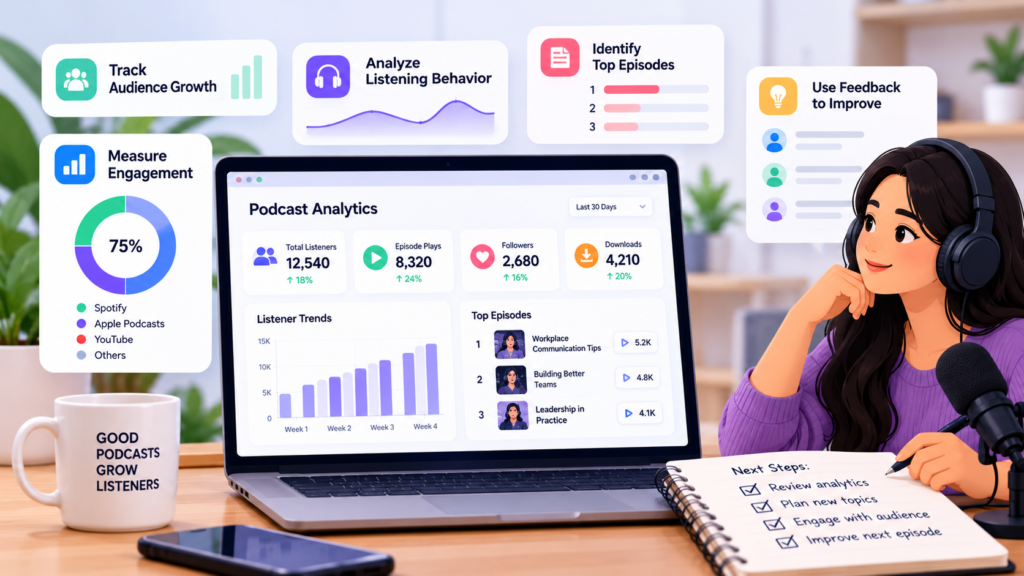
Use listening analytics to identify popular topics and areas for improvement. Track performance over time and compare episodes released during similar periods to ensure meaningful results. Also, try to compare episodes that are in similar phases of publication, not just random ones.
Apple Podcasts provides analytics on listener engagement, listening behavior, and episode performance. Use these insights to understand which episodes resonate with your audience and where improvements may be needed.
Concentrate on these areas:
- Increasing Your Audience: Watch for new followers and subscribers coming in; that’s usually the early signal.
- Listening Behavior: Check available completion and consumption numbers. Are people dropping off fast or sticking around?
- Episode Performance: Compare themes, formats and even when they are released. Sometimes it’s just timing or structure.
- Audience Feedback: Keep an eye on the most common questions and suggestions from your listeners. That typically shows what to deepen.
- Next Steps: Choose one enhancement to try in your next episode.
One more thing to note: Downloads, views, and engaged listening measure different behaviors. So use the data you have to guide decisions; don’t rely on a single metric only.
5. Connect Podcast Production With Promotion
Having a good recording technique means it’s easier to publish episodes consistently and create promotional assets. Structured recordings, quality audio and useful source material may power your complete content workflow.
For teams exploring podcast content and production, Airmeet has a number of podcast-related resources worth checking out.
And when thinking of tools, see how they fit your workflow:
- Record: Can hosts and guests record with confidence?
- Editing: Can your team make the finished episodes fast enough?
- Repurpose: Can you turn important moments from each episode into valuable short clips and supporting promotional content?
- Distribution: Can you get the assets ready for the platforms you use?
- Measurement: Define the success metrics you will track, such as episode page visits, downloads, listens and listener engagement.
Conclusion: Build a Stronger Podcast Audience
A good podcast marketing plan is a mix of quality content, steady promotion and routine performance checks. Clear episode titles, searchable show pages, short video clips, guest collaborations and email updates can help people discover your podcast and stay connected with it over time.
Pick the techniques that actually match your audience, your budget, and the resources available to you. After each release, do a quick look at how it went and get useful listener feedback.
When you are planning your next episode, you can explore Airmeet’s podcast solutions for tools that support podcast recording & production. You can also visit the Airmeet Podcast page for additional resources and insights on podcast production. Focus on tactics that lead to real outcomes and keep tuning your strategy as you learn what clicks with your audience.
FAQs
Assign a realistic time to each release. Start with one normal promotional channel and one discovery experiment. Log the hours it takes and the results, then tweak the workload to keep the publishing pipeline going.
Yes, go ahead and promote those audio-only podcasts with quote graphics and captions, audiograms, and waveform videos. Make sure you point out the key insights, include subtitles, keep the branding consistent, and don’t forget to add a clear link to the full episode.