



The good news is that most shows on that list are not promoting at all. Platform recommendations and in-app search drive 30 to 60% of first-time podcast discovery, which means the teams that optimize for those signals have a significant advantage over the ones that hit publish and hope.
This guide covers 19 promotion strategies organized by where they produce the most impact: before launch, through content distribution, through community and partnerships, through search and AI visibility, and through measurement that tells the team what is actually working.
1. Before the Episode Publishes
The promotion window does not open when the episode goes live. It opens the week before. The guest has an audience. The topic has a search intent. The email list is waiting. None of those opportunities are available after the episode is already live and buried under the week’s other content.
Strategy 1: Build The Audience Before The First Episode Launches
The most common podcast promotion mistake is treating launch day as the starting point. A show that launches into silence has to build momentum from zero. A show that spends six to eight weeks building an audience before launch has followers, reviews, and email subscribers waiting when episode one drops.
In The Six Weeks Before Launch:
- Announce the show to the existing email list and ask subscribers to follow it before it publishes
- Post a 60-second clip of the host explaining who the show is for and what problem it addresses
- Give five to ten people in the target audience early access to episode one and ask for an Apple Podcasts review in exchange
- Add the show’s Apple Podcasts and Spotify links to every team member’s email signature
A show that launches with 200 followers and 30 early reviews is treated differently by platform algorithms than one that publishes episode one with no activity on its profile at all.
Strategy 2: Write The Episode Title For Search, Not For Cleverness
Episode titles under 60 characters perform best for search discovery, and the title is the single highest-leverage SEO element available to a podcaster. A title like “Episode 47: Great Chat with Jane Smith” tells the algorithm nothing and the potential listener nothing. A title like “How Jane Smith Grew Her Email List from 200 to 20,000 Without Paid Ads” tells both the algorithm and the listener exactly what the episode contains.
The Formula That Works:
- Lead with the outcome or insight, not the guest name
- Use the language the target listener types into search, not the language the host uses internally
- Front-load the most important keywords in the first five words of the title
- Keep it specific enough that someone who has never heard of the show knows whether this episode is worth their time
Go back through the existing episode catalog and rename the ten best episodes using this formula. Old episodes with strong titles keep pulling in new listeners for months after publication.
Strategy 3: Optimize The Show Description For Discovery
The show description is the second most important SEO element after the title and the most consistently neglected. Most show descriptions describe the host rather than the listener. They explain what the host does rather than what the listener gets.
A description that starts “We interview marketing leaders about their careers” serves the host. A description that starts “If you run B2B marketing and want to understand how the most effective demand generation teams actually operate, this show covers the decisions, frameworks, and experiments that drive real pipeline” serves the listener and performs better in search.
Rewrite the show description to open with the specific outcome the listener receives, name the specific type of listener the show serves, and include the three to five keywords the target audience actively searches for.
2. Content Distribution Strategies
These strategies determine how far each episode travels after it is published. Publishing to Apple Podcasts and Spotify covers the listeners who are already looking. Distribution through YouTube, social clips, show notes, and email covers the ones who are not looking yet but would listen if they found it.
Strategy 4: Publish On YouTube As A Primary Destination, Not An Afterthought
44% of new podcast audiences use YouTube as their primary discovery tool, making it the single largest podcast discovery platform in the US market. A show without a YouTube presence is invisible to nearly half of potential new listeners.
What This Requires In Practice:
Publishing on YouTube is not simply uploading the audio file with a static image. That approach exists on YouTube but performs poorly. A properly structured YouTube podcast upload includes a video component, a properly optimized title and description with chapter markers, a thumbnail that communicates the episode’s core topic visually, and tags that connect the episode to the audience’s existing search behavior.
Video podcasts grow 2 to 3 times faster than audio-only shows. The camera does not need to be cinematic. A consistent, well-lit talking-head setup performs significantly better than no video at all.
Strategy 5: Create Short-Form Clips As The Primary Social Distribution Format
Clipped highlights drive up to 60% of new listener acquisition on TikTok and YouTube Shorts, and a strong clip program can increase discovery reach two to five times compared to posting full episodes alone. The clip is frequently the first thing a new listener encounters before they ever see the show’s name.
What Makes A Clip Work:
- It opens with a line that works without any context from the surrounding episode
- It contains one complete idea with a beginning, a middle, and a resolution
- It runs between 45 and 90 seconds for LinkedIn and YouTube Shorts and under 60 seconds for TikTok
- It has captions because most social media videos play without sound by default
- It ends with a specific reason to listen to the full episode, not a generic “link in bio.”
Three to five clips per episode, distributed across LinkedIn, Instagram Reels, YouTube Shorts, and TikTok on different days of the week, gives the algorithm multiple independent opportunities to surface the episode to new potential listeners.
Strategy 6: Write Show Notes That Search Engines Can Rank
Audio is not indexable by search engines. The show notes page is. A show notes page that contains a full transcript, chapter markers, the key claims from the conversation, and specific resources mentioned gives Google and other search engines a structured, indexable document that can rank for the same keywords the episode covers.
Publishers who include transcripts and show notes gain 12 to 28% more organic traffic than those who publish audio only. That traffic, compounding over a catalog of 50 or 100 episodes, produces a meaningful and sustainable discovery channel that requires no ongoing spend.
The show notes page should be treated as a blog post, not a summary. A genuine article that addresses the episode’s core topic, includes the specific quotes and data points from the conversation, and links to the resources discussed is a search asset that generates listeners for months or years after the episode publishes.
Strategy 7: Send An Email To The List Every Time An Episode Publishes
Email newsletter integration boosts long-term listener retention by approximately 22%. Every branded podcast should have a dedicated email list for the show, separate from the general company newsletter, where subscribers receive an episode notification and a short personal note from the host explaining why this specific episode matters to this specific audience.
The email is a direct communication from the host to a listener who asked to be kept informed, and writing it that way rather than as a marketing message is what determines how often it gets opened.
The Sequence That Works:
- Monday before publish: send the guest their amplification kit so they can share before the episode drops
- Tuesday publish day: send the email list notification with the host’s personal take on the episode
- Thursday: publish the show notes blog post with full transcript and SEO-optimized title
- Friday: publish a second clip covering a different episode moment than the one used on Wednesday
Strategy 8: Repurpose Each Episode Into A Blog Post
A 45-minute interview contains enough content for a 1,500-word blog post, three LinkedIn articles, a newsletter section, and five social posts. Most shows generate none of those assets because repurposing happens only when someone has spare time.
Plan the repurposing stack before the episode records. Decide which assets the episode will produce, assign an owner and a deadline to each one, and build the publishing calendar around them rather than hoping they get done between episodes.
3. Community and Partnership Strategies
These strategies borrow existing audiences rather than building reach from zero. A new listener acquired through a guest appearance or a podcast swap already trusts the host who sent them. That trust transfers to the show in a way that no paid ad or algorithm recommendation can replicate.
Strategy 9: Appear As A Guest On Shows Where The Target Audience Listens
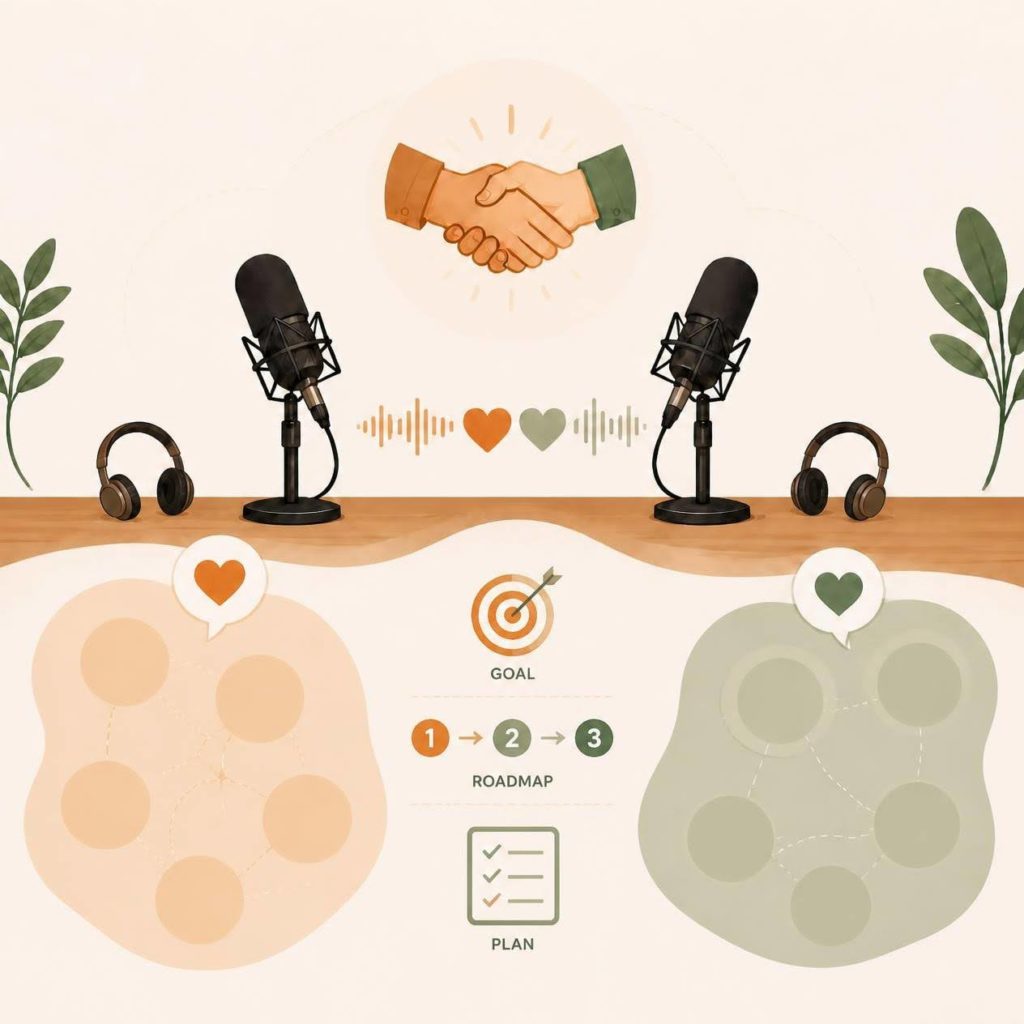
54% of podcast listeners find new shows through other podcasts, making guest appearances one of the most efficient discovery channels available. The audience is already a podcast listener, already trusts the host who recommended the show, and is already in the habit of adding shows to their queue.
The mistake most podcasters make is treating guest appearances as one-off events rather than a repeatable system. A founder who appears on one show, sees a spike in downloads, and books the next appearance six months later when someone asks is not running a promotion channel. They are doing occasional PR.
Building A Guest Appearance System:
Identify 20 to 30 shows where the target audience listens and that cover adjacent topics to the show’s expertise. Develop three distinct story angles rather than one recycled pitch. Build a post-appearance workflow that captures every listener who converts to a website visitor, social follower, or email subscriber in the 72 hours after the episode publishes.
Strategy 10: Build A Guest Amplification Kit
Guests with existing audiences can boost downloads by 20 to 300% per episode, but most guests share the episode once in an Instagram story and consider the obligation fulfilled. A guest amplification kit removes every friction point between the guest and meaningful sharing.
The kit delivered two days before publication should include:
- Pre-written social posts in the guest’s own voice, ready to copy and paste
- A short clip from their strongest moment in the episode, formatted for LinkedIn and Instagram
- The episode link on every major platform
- A quote graphic with their name and the show’s branding
- A suggested email to their list if the guest has one
A guest who shares meaningfully reaches an audience the show team could not have accessed through any owned or paid channel. Removing every friction point between the guest and that share is the most valuable thing the production team can do after the episode goes live.
Strategy 11: Run Podcast Swaps With Shows At A Similar Size
A podcast swap is an agreement between two shows to each record a short promotional trailer for the other and run it as a bonus episode or mid-roll insert. It gives each show access to the other’s entire subscriber base for the cost of 60 to 90 seconds of recording time.
Identify five to ten shows at a similar subscriber count covering adjacent topics where audiences would overlap without competing directly. Reach out with a specific proposal: a 90-second trailer swap where each host introduces the other show to their audience. The best swaps happen between hosts who have genuine respect for each other’s content and can speak about it authentically rather than reading a script.
Strategy 12: Build A Community Around The Show
Listeners who join a community built around a show become advocates rather than passive consumers. A Discord server, a LinkedIn group, or a Slack community where listeners discuss episodes, share resources, and engage with the host between episodes creates a retention mechanism and a word-of-mouth channel that no platform algorithm can replicate.
Keep The Community Focused:
A community built around a specific topic the show covers performs better than a general show fan community. A podcast about B2B demand generation should build a community for demand generation practitioners, not a community for fans of the podcast. The topic is the draw. The show is what they have in common.
Strategy 13: Participate In The Communities Where The Target Audience Already Spends Time
Before building a new community, show up in the existing ones. LinkedIn groups, Reddit subreddits, Slack communities, and Discord servers where the target audience already spends time are places where a host with genuine expertise can share relevant episode content without it feeling like self-promotion.
The approach that works is contribution first. Answer questions, share insights, and reference specific episodes only when they directly address something the community is discussing. Hosts who show up only to drop links get ignored. Hosts who consistently contribute and occasionally mention the show build audiences that grow organically over time.
4. Search and AI Visibility Strategies
These strategies determine whether the show appears when buyers are actively looking for information the show covers. Most podcast promotion focuses on interrupting people who are doing something else. Search and AI visibility work differently: they put the show in front of someone at the exact moment they are looking for what the show already covers.
Strategy 14: Optimize For In-App Podcast Search
Platform recommendations and in-app search drive 30 to 60% of first-time podcast discovery, making in-app search the single largest discovery mechanism for most shows. Apple Podcasts and Spotify both surface shows based on keyword relevance in the show title, show description, and episode titles.
The Optimization Process:
- Research the specific terms the target audience types when searching for shows in the category
- Include the two or three highest-traffic terms in the show title and description
- Tag episodes with the relevant categories and subcategories available in the hosting platform
- Update the show description every six months to reflect the specific topics the show has recently covered
Strategy 15: Plan Episodes Around AI Search Queries
When a potential listener asks an AI engine about a topic the show covers, whether the show appears in the answer depends on whether the show’s supporting text content includes the specific claims, frameworks, and recommendations the AI engine can find, verify, and cite.
Three Steps To Improve AI Search Visibility:
- Plan episode topics around the specific questions buyers are actively asking AI engines rather than around broad category keywords
- Publish a supporting blog post with every episode that covers the episode’s core argument in text, including specific data points and named frameworks the AI can extract and cite
- Use a tool like AirPulse to monitor where the show appears in AI-generated answers about the topics it covers and identify where competitors are being cited instead
Strategy 16: Submit To Niche Podcast Directories Beyond Apple And Spotify
Apple Podcasts and Spotify cover the majority of listeners but not all of them. Submitting to Pocket Casts, Amazon Music, iHeart Radio, TuneIn, and niche industry directories relevant to the show’s topic expands the discovery surface without significant additional work. Most hosting platforms submit to major directories automatically. Check the hosting platform’s distribution settings and add any directories not already covered.
Strategy 17: Run Paid Ads To The Episode Content That Is Already Working Organically
Paid advertising accelerates organic growth but does not replace it. Before spending on ads, identify which episodes are already generating the highest organic discovery rate, the longest listen duration, and the most social shares. Those episodes are the ones that have proven their appeal with an audience. Paid promotion amplifies what is already working rather than trying to force traffic to content that has not yet earned organic attention.
The Most Effective Paid Podcast Promotion Channels In 2026:
- Spotify audio ads targeting listeners of similar shows in the same category
- LinkedIn promoted posts for B2B shows with professional audiences
- Short-form video ads on TikTok and Instagram using the show’s best-performing organic clip
Set a defined test budget and a specific metric the ad spend is being evaluated against before running any paid campaign. A campaign without a defined success metric produces data but not a decision.
5. Live Show Promotion Strategies
A live podcast format creates promotion opportunities that a recorded-only show cannot access. Every other strategy in this guide promotes content after it exists. A live show can be promoted before it records, which means the audience is already engaged before a single word of the episode has been spoken.
Strategy 18: Promote The Live Episode Like An Event Before It Records
A live podcast episode is both a content asset and a live event, which means it can be promoted using event marketing tactics in addition to standard episode promotion.
Two Weeks Before The Live Episode:
- Send a calendar invitation to the email list with the guest name, the topic, and the live streaming link
- Post a countdown on LinkedIn with a teaser from a previously related episode
- Ask the guest to promote the live recording to their own audience in the same way they would promote a speaking appearance
The live recording creates a replay asset that carries social proof a standard recording does not. A replay with visible audience engagement tells a new listener that other people found this conversation worth their time.
Strategy 19: Distribute The Replay Across Every Channel With A Different Angle Per Platform
The live episode generates one long-form asset. That asset becomes:
- The full replay on YouTube with chapter markers and an optimized title
- Three short clips for LinkedIn, Instagram Reels, and YouTube Shorts from different moments in the session
- A show notes blog post with the full transcript and key takeaways
- A newsletter email with the host’s personal reflection on what the conversation revealed
- A quote graphic featuring the guest’s most memorable line from the session
Each distribution format reaches a different segment of the audience and gives the platform algorithm multiple independent opportunities to surface the content to new potential listeners.
Conclusion
Podcast promotion in 2026 is a system that runs consistently behind every episode, building compounding discovery across search, social, AI visibility, community, and partnerships at the same time.
The teams that grow fastest are not the ones with the largest production budgets. They are the ones that built a promotion system before they needed it, run it the same way for every episode, and measure what is actually driving listener growth rather than what is easiest to count in a dashboard.
Start with the two or three strategies from this list that address the biggest gap in the current promotion workflow. Run them consistently for six weeks before evaluating the results. Add the next layer only after the first one is producing a measurable signal.
For teams running live episodes, tools like AirStudio handle the recording, streaming, and clip creation steps that make this system work at scale.
Frequently asked questions
Guest appearances produce download spikes within 48 hours. SEO from show notes takes three to six months to compound. Consistent promotion across three to four channels for six months produces growth that no single tactic run sporadically can match.
Start with strategies that borrow existing audiences: guest appearances, podcast swaps, and community participation all generate listener growth without requiring an existing platform. Pair those with strong episode title optimization and a show notes page built for search and organic discovery starts within the first 30 to 60 days.
A complete pre-launch promotion plan covers each of these before episode one publishes:
- Audience seeding: announce the show to the existing email list and network at least four weeks before launch and ask for follows and early reviews
- Title and description optimization: write both for in-app search using the specific keywords the target audience searches for
- Early access program: give five to ten people in the target audience early access to episode one in exchange for an Apple Podcasts review before public launch
- Social presence: set up the show’s accounts and share teaser content in the four weeks before launch
- Email list: set up a show-specific list separate from any existing newsletter and invite the existing audience to subscribe before launch day
- YouTube channel: create the channel, optimize it with the show’s keywords, and upload episode one as a video with chapter markers on launch day