




Marketing teams need pipeline attribution, and sales leaders also expect qualified leads from webinars, virtual conferences, and hybrid events.
And in fact, they should.
That’s because virtual events have become a critical demand-generation channel that directly impacts pipeline generation, account engagement, and revenue growth.
For B2B marketers, virtual events and webinars are one of their most effective channels for pipeline generation and buyer engagement.
What is the Virtual Event Platform for Enterprise Demand Generation and Pipeline Attribution?
Demand generation means virtual event platforms enable businesses to host online events in the form of webinars, conferences, and product launches to attract potential customers, generate leads, boost sales opportunities, and maximize the event ROI.
On the other hand, pipeline attribution is about tracking how virtual events contribute to sales opportunities and revenue. However, enterprise virtual event platforms are often integrated with CRM and marketing automation tools like Salesforce, HubSpot, and Marketo to manage leads and track campaign performance.
9 Virtual Event Platforms for Enterprise Demand Generation and Pipeline Attribution
1) Airmeet
Airmeet is the virtual and hybrid event management platform recognized for creating highly interactive and engaging experiences for audiences in a virtual environment.
Airmeet is also built to accelerate the pipeline, which makes the platform stand out from traditional webinar platforms.
It combines all of the main pieces of pipeline development elements into a single platform, including audience engagement, lead collection, event analytics, marketing integrations, and more.
One of Airmeet’s biggest strengths is its rich set of features that engage attendees during a live event.
It includes live chat, Q&A sessions, real-time polling, interactive breakout rooms, networking lounges, gamification, and virtual booths, which encourage real-time interaction between attendees, speakers, and sponsors throughout the event. These engagement features can keep the audience engaged longer, which improves lead quality and increases conversion opportunities for businesses.
For pipeline attribution, Airmeet provides detailed analytics and reporting tools that allow businesses to measure event performance and monitor attendee movements in real-time.
With the Airmeet event analytics dashboard, you can track various metrics such as attendance rates, engagement levels, session participation, booth visits, and content interactions, allowing your sales and marketing teams to focus on qualified and authentic leads.
Furthermore, Airmeet integrates CRM and marketing automation tools like Salesforce, HubSpot, Mailchimp, and Marketo, making it easier for organizations to sync lead data, automate follow-ups, and measure return on investment (ROI), helping businesses view the entire customer journey from event registration to closing deals.
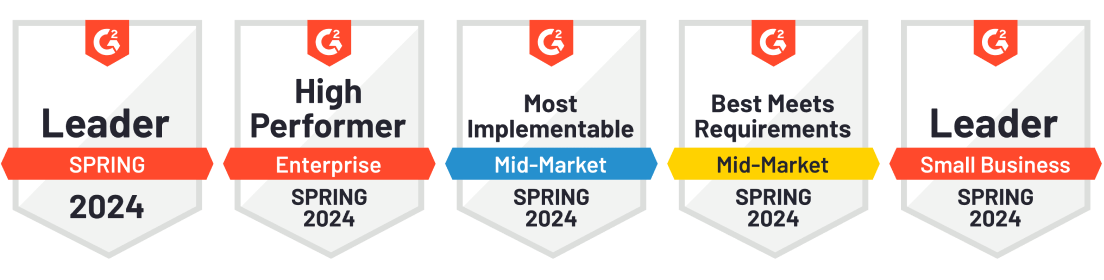
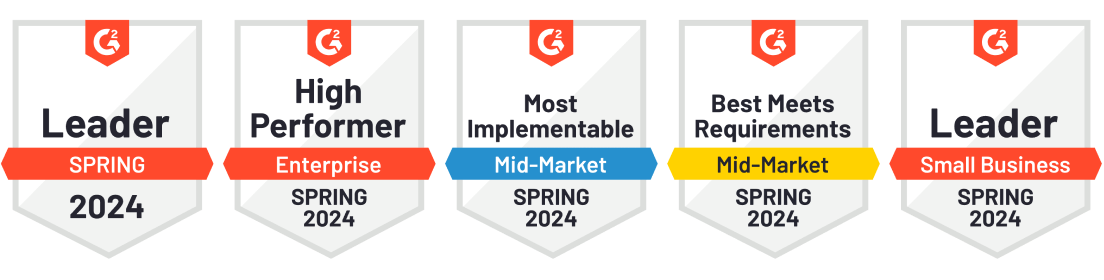
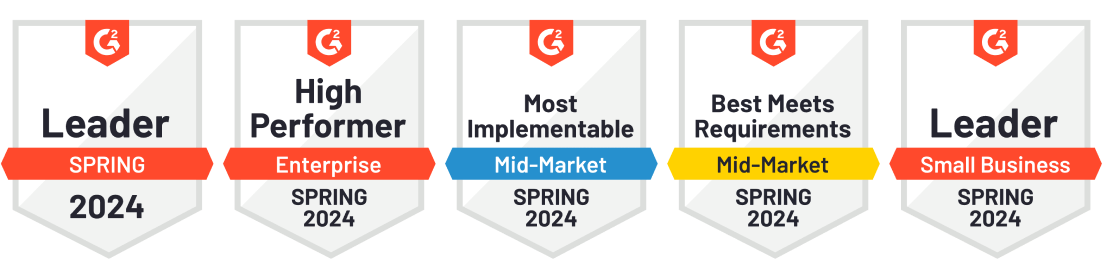
Airmeet stands out as the best enterprise event platform as it provides every tool, feature, and capability needed that directly contribute to the sales pipeline and business growth.
2) Cvent
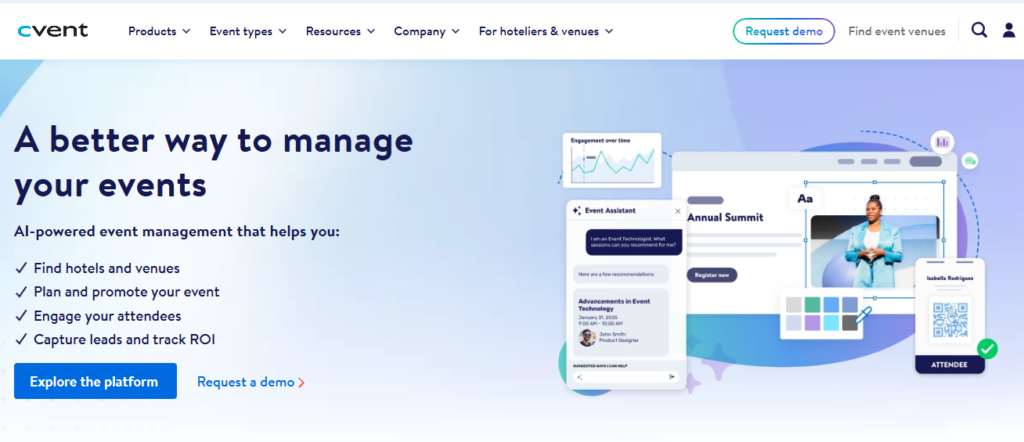
Cvent is the leading cloud-based enterprise event management platform that allows you to host engaging webinars, in-person, virtual, and hybrid events. The platform offers features such as customization, Q&A, polls, networking, and more to engage the audience, boost engagement, and capture qualified leads for your business.
Cvent integrates with CRM and marketing platforms like Salesforce, Marketo, and HubSpot to help organizations connect event data for use across marketing, sales, and reporting workflows. Additionally, these integrations enable attendee and engagement data—such as registrations and participation—to flow into marketing systems, helping teams use event data for segmentation, nurture campaigns, and follow-up activities.
3) RingCentral Events
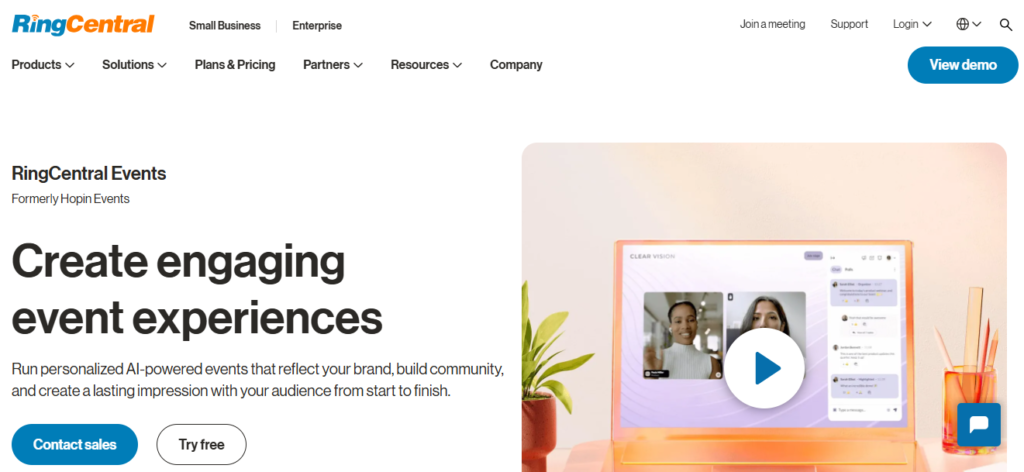
RingCentral Events is the AI-powered virtual and hybrid event management platform that enables you to reflect your brand, build community, and create a lasting impression with your audience. It supports webinars, virtual events, hybrid events, and on-site experiences, allowing you to connect and engage with your audience in your preferred event format.
RingCentral Events integrates with CRM systems like Salesforce, ensuring all your communications happen in one place. Plus, it provides an open platform where you can connect all your essential tools or build custom workflows using their APIs. The platform also includes engagement analytics, attendee insights, and AI-generated content tools to elevate attendee interaction and make data-driven decisions.
4) On24
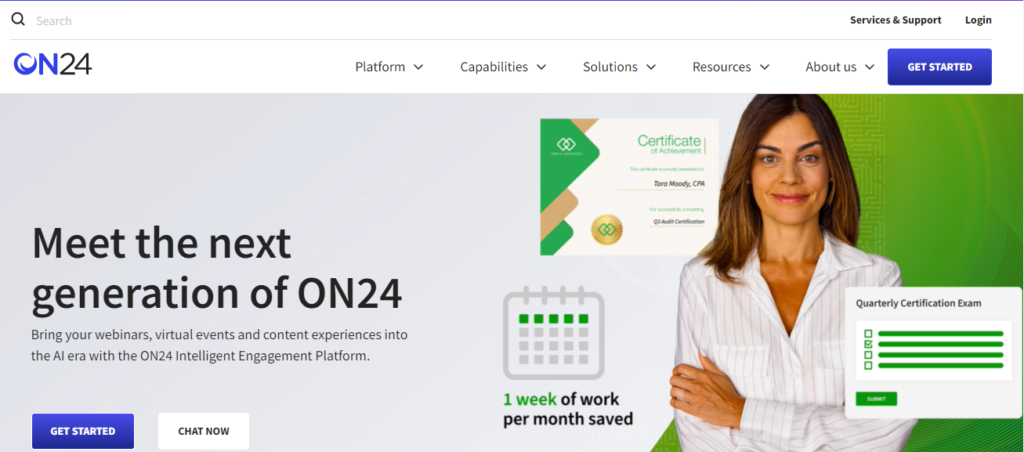
On24 is an AI-enabled platform that transforms webinars, events, and content into personalized buyer journeys and drives pipeline and revenue. It builds best-in-class and branded experiences for the audience. Its AI chatbot interacts with the audience 24/7 through AI-generated content. Plus, it tracks audience engagement data across every touchpoint and measures your performance. On24 also enables data-driven actions across go-to-market teams to convert prospects into customers and achieve business goals.
5) BigMarker
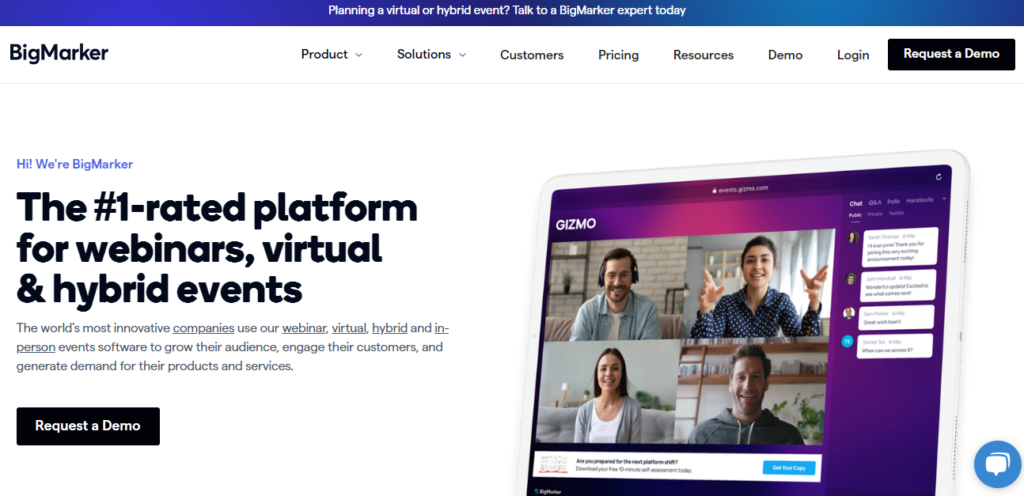
BigMarker is the virtual, in-person, and hybrid event management platform that creates highly customized, personalized webinar experiences for the audience. It helps educate customers, captures event data, and builds a pipeline. BigMarker generates insights across every touchpoint. It also accelerates the pipeline with AI-powered personalized follow-up and segment-smart content suggestions.
BigMarker tracks every stage of the attendee journey, from registration data to live engagement and post-event results. Reports include entry and exit times, engagement duration, poll and Q&A activity, downloads, email performance, and host logs for complete visibility.
The platform connects with top CRM and marketing systems, including Salesforce, HubSpot, Marketo, Eloqua, Pardot, and Microsoft Dynamics. It also supports tools like Mailchimp, ActiveCampaign, and Iterable, plus 500+ additional integrations via Zapier and Webhooks.
6) Livestorm
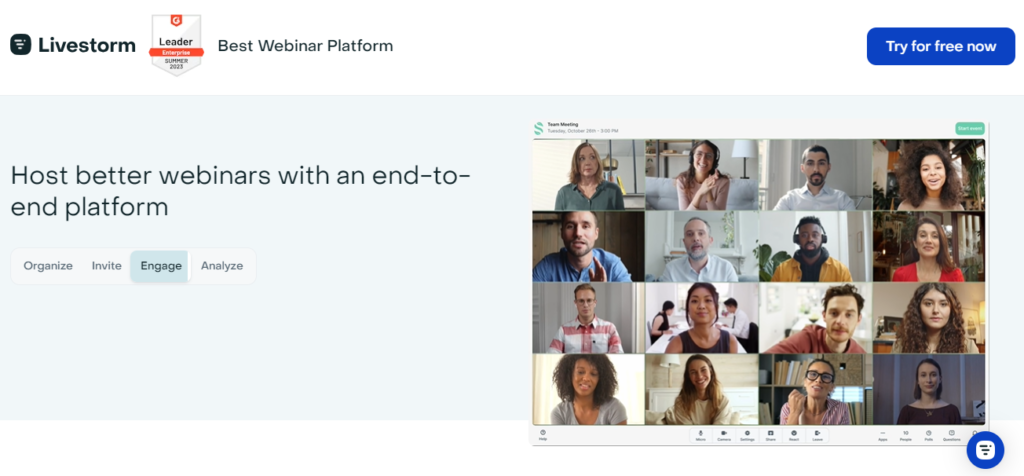
Livestorm stands out as a one-stop video engagement platform designed for hosting virtual events, webinars, and meetings. It offers an initiative interface that reduces onboarding time. You can interact with prospects in real time through live chat, polls, and Q&A.
Livestorm integrates with CRM platforms like HubSpot, Salesforce, Marketo, Pardot, Zapier, and Pipedrive that automatically sync your marketing campaigns and track specific attendee touchpoints to close more deals for your business.
7) Demio
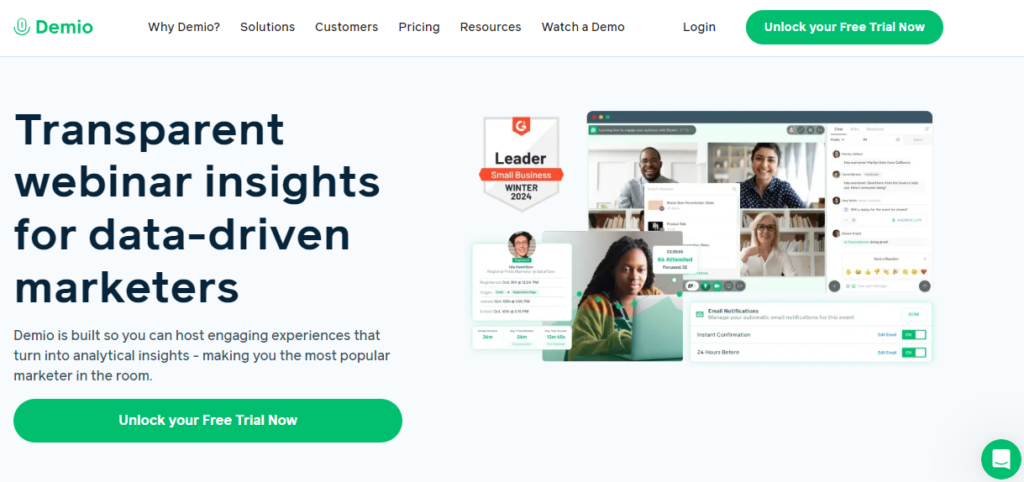
Demio is the analytics-focused webinar platform that prioritizes detailed analytics and attribution. The platform is specifically designed for marketing, sales, and customer success teams whose focus is on revenue growth.
Demio is one of the highly effective platforms for pipeline attribution as it offers detailed webinar analytics and engagement reports. It analyzes the total number of registrants, session attendees, and session dropouts over time and also identifies who was most focused during your session and when people’s attention waned.
The platform also monitors who downloaded your handouts, participated in your polls, clicked your featured actions, and drove conversation in your chat or asked a question. It segments your webinar’s contacts by those who attended or were a no-show for the session.
8) vFairs
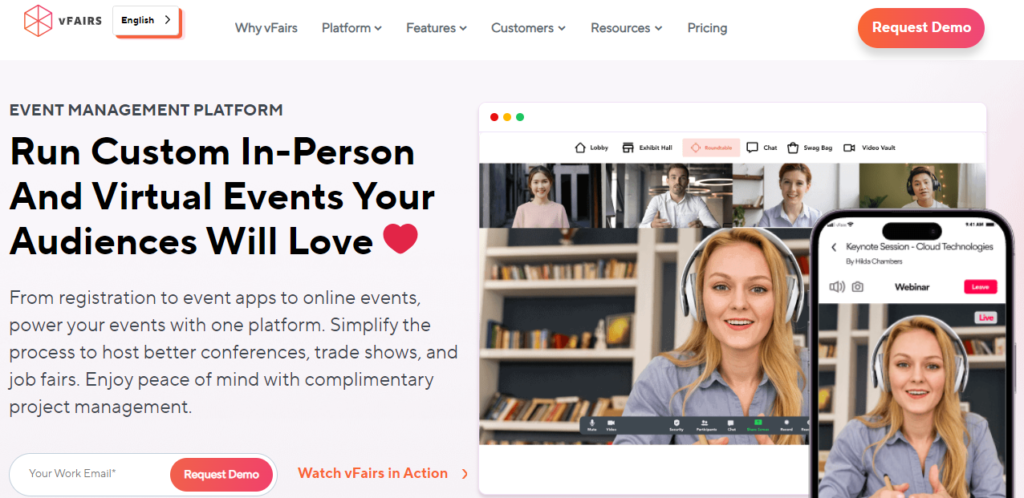
vFairs is a virtual, in-person, and hybrid event management platform that helps organizations host and manage events of all types such as conferences, webinars, trade shows, and more. The platform seamlessly tracks attendee behaviour and engagement data in real-time through its detailed event analytics dashboard. It allows you to get tailored attendee and engagement reports delivered automatically to your storage of choice.
vFairs integrates with CRM platforms like HubSpot, Salesforce, Eventbrite, and Zoho that provide you with attendee engagement data and allow you to easily import/export contacts between systems. Plus, it integrates with email marketing platforms like Mailchimp, ActiveCampaign, Pardot, and Marketo to run marketing campaigns and send targeted emails to the audience.
9) Webex Events
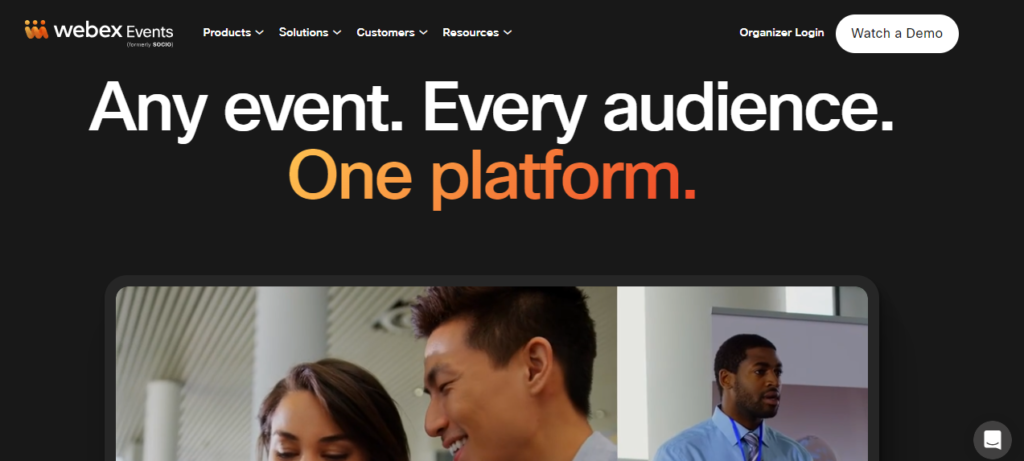
Webex Events is end-to-end event management software that lets you host virtual, hybrid, and in-person events. The platform allows you to host various types of events such as conferences, trade shows, and more, supporting audiences of up to 100,000 attendees.
Webex Events balances ease of use with deep customization, so you can craft the event you envision with a single solution. Their analytics dashboard displays each event’s ROI along with comprehensive statistics on sponsorship, ticket sales, attendee engagement, and more.
Webex Events offers engagement features such as live chat and Q&A, breakout rooms, and more that engage the audience and help capture qualified leads throughout the session. Plus, it provides lead retrieval tools that allow exhibitors and sponsors to capture attendee information by scanning QR codes, qualify prospects, collect enriched lead data, and export contacts directly into CRM systems for follow-up.
Final Thoughts
Enterprise virtual events are no longer just marketing campaigns; they have now become revenue-generating engagement channels for businesses. The best virtual event platforms are those that enable organizations to host interactive and meaningful webinars, conferences, and hybrid events.
The right platform is the one that offers essential tools to engage your audience while capturing valuable attendee data, generating sales opportunities, and helping marketing teams measure the impact of the events.
FAQs
Businesses should use enterprise virtual event platforms because they allow businesses to
- Reach their events to larger audiences.
- Capture valuable attendee data.
- Engage prospects in real-time.
- Identify qualified leads.
- Nurture the prospects into the sales funnel.
Airmeet, Bizzabo, On24, and Cvent are strong platforms for hybrid enterprise events as they combine in-person and virtual experiences in a single platform. These platforms integrate CRM and marketing tools, helping businesses track attendee behavior, find new leads, and measure event ROI.
Industries like SaaS, healthcare, finance, education, and technology can use enterprise virtual event platforms for marketing their products, engaging their customers, and generating qualified leads, and get the most out of them.