

This is unfortunate, given how social media may, in fact, be among the most reliable platforms of webinar subscriptions when approached with a clear strategy, the right timing and content – designed for how people actually behave on each platform.
This article breaks down the real-life, practical strategies of social media that helps in converting interest to registration, particularly for small business and global enterprises that host professional or large-scale webinars.
Why Social Media Is Effective for Webinar Sign-ups

Marketing on social media gives the opportunity to promote a webinar topic through posts, videos, comments, or shares over several days or weeks, without asking for commitment as compared to email marketing.
It is fair to assume that most prospects do not register for a webinar upon viewing it initially. They subscribe once they have viewed it a few times, know the value and trust the speaker or the brand.
Social media supports this naturally by enabling:
- Ongoing visibility over on social media for several weeks.
- Relevant content and engagement to build trust.
- Easy shares to reach more people than you are reaching now.
Social traffic usually translates into more conversions than you expect, when used along with an optimized webinar landing page, especially with educational or problem-solving webinars.
Why Appropriate Social Media Channels are Necessary
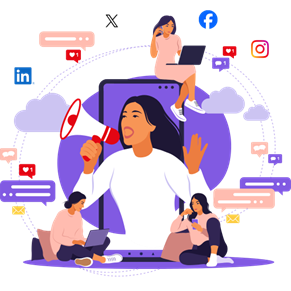
Social media webinar promotion does not guarantee success on all platforms, automatically. It is always better to concentrate on the channels that suit the intent of your audience, than promote everywhere blindly, hoping for the best.
Let’s look at the best platforms for webinar promotions-
LinkedIn is incredibly effective when it comes to B2B webinars, professional training, workforce network transformation SaaS demos and industry panels. Here, content to be used is typically business problem-related, expert-driven, cashing in on the credibility of the speaker.
Twitter (X) can be employed in webinars centred on thought leadership and live interaction. The threads, pinned posts and short opinion-led hooks are helpful with webinars concerning technology, marketing, or contemporary trends.
Instagram is more effective with webinars, workshops, and community-based events by creators. Stories, reels, and countdown stickers can ensure a solid brand presence, without being too promotional.
Facebook continues to work for niche groups and retargeting. Its organic reach may have decreased, but it seems that Facebook advertisements usually provide stable webinar attendance at a moderate price.
The key is depth over breadth. A single or two platforms done well will outdo the prominence on five scattered platforms.
How to Build a Pre-Webinar Social Media Strategy (4–6 Weeks Out)
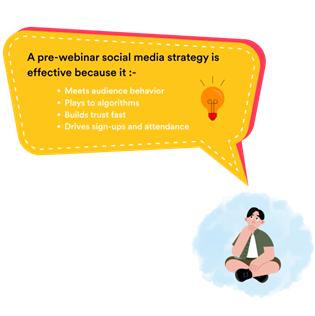
High-converting webinar campaigns typically start four to six weeks earlier to effectively educate audiences, create interest and minimize friction.
At this point, we are not attempting to sell the webinar hard, but are trying to create relevance. The success of content at this stage comprises:
- Posts that draw emphasis on the central issue that the webinar will address.
- Brief observations on the subject.
- Introduction of speakers or experts to establish authority.
- A teaser of what the attendees will learn.
Rotation of content avoids boredom and makes the message fresh even in the case when the same event has to be advertised repeatedly.
How to Optimize a Webinar Landing Page for Social Traffic
There is no social tactic which will work in case the landing page is not converting.
A high-performing webinar landing page typically contains:
- One clear call-to-action
- A headline that states the benefits (not an agenda).
- Minimal navigation and distractions.
- Social proof, such as testimonials, logos, or the number of previous attendees.
Social media drives curiosity. The landing page must remove doubt and must eliminate uncertainty.
How to Maximize Registrations with a Posting Timeline
Consistency matters more than volume. Rather than making random posts, create a simple timetable that aligns with your audience’s preferences to get good results.
- 4-5 weeks prior: Announcement, topic breakdown, speaker introduction.
- 2-3 weeks prior: Educational promotional materials, brief video clips, value-based posts.
- 7 days prior: Reminder posting, “register for this webinar” by stating who it is aimed at, and including social proof.
- 48 hours prior to: Urgency-based prompting and last minute registration drive.
- Day of the webinar: Last-call posts and story updates.
How to Leverage Paid Social Ads to Scale Webinar Sign-ups
Organic marketing creates credibility, although advertisements assist in increasing the reach when the messaging is confirmed. The most effective approach is not broad targeting but warm audience amplification.
Strategies that have been proven to work in terms of paid options are:
- Recapturing visitors to the webpage.
- Retargeting video viewers
- Registrants based lookalike audiences.
Begin small, experiment with creatives and scale what works. Paid ads work best when they amplify content that already resonates organically.
How Incorporating Social Proof Improves Conversion Rates
Individuals are reluctant to enroll when they do not know whether a webinar can be beneficial to them. Social proof lowers this hesitation to a minimum.
Effective social proofs includes:
- Attendance registered or past attendees.
- Speaker Credentials or experience.
- Audience testimonies from past webinars.
- Easily identifiable company and partner logos.
How Investing in the Right Webinar Platform Leads to Better Results
Engagements may come from social media, but what happens next will determine conversions. The right webinar platform makes sure that social traffic leads to real participation and meaningful engagement.
Airmeet helps teams to create interactive virtual experiences that can be used by people in any industry and with any audience, without losing depth or interest.
- Made for learning programs, town halls, conferences, and webinars
- Features that put engagement first and encourage real participation
- It can be used for events in sales, HR, education, and leadership.
Organizations can connect with more people and get more people to take action by supporting immersive and interactive webinars.
Conclusion
When planned early and executed with platform-specific strategies, social media can be a solid source of quality webinar signups. Regular presence, high-valued content, performance testimonials, and scheduled-relevant notifications can assist in motivating audiences who are interested to act.
These efforts should be combined with an optimized landing page and the appropriate webinar platform that will minimize the friction and increase attendance rates.
Webinar platforms such as Airmeet are created to host professional webinars and provide interactive capabilities, rich attendee experiences, and event analytics that enable organizers to host engaging and well-managed online events.
FAQs
Webinar posts get engagement but few registrations when messaging attracts attention without clear conversion intent. This usually happens when:-
- Posts lack a strong call to action.
- Focus on likes instead of outcomes
- Fail to build enough trust before asking users to register.
When the landing page doesn’t match what the post promised, social media traffic bounces. Users leave before registering because the page takes too long to load, the benefits aren’t clear, there are too many form fields, or there are too many things to do.
People sign up for webinars but don’t go because the reminders aren’t strong enough and it’s not clear what they’ll get out of them after they sign up. People forget about or don’t prioritize the event if they don’t get calendar invites, automated reminders, and reminders before the event.
You can get more people to sign up for your webinar without spending more on ads by making your messages clearer, adding more social proof, optimizing the landing page, and retargeting people who have already interacted with your content.
Webinars do better on email because people who get them are already interested in the brand and trust it. Before they convert, social media audiences need to see the same thing over and over again, have a clearer sense of value, and build more trust.