


With shrinking attention spans and growing expectations for better learning experiences, companies are finally shifting toward something more modern, more practical, and far more engaging: AI-created immersive training experiences.
These AI-powered simulations don’t just tell employees what to do — they let people practice real-world scenarios, experiment, make decisions, and see the outcomes without any real-world consequences.
Discussed in this blog are five of the most impactful AI-created employee training experiences organizations are using today — how they work, where companies are implementing them, and why they’re effective.
1. AI-Created Simulated Role-Play Experiences
If there’s one AI training format that has exploded in the recent past, it’s AI-driven role-plays. Instead of reading conversation scripts or watching training videos, employees can now talk to an AI-powered virtual character that responds in real time, just like a real person.
This makes the experience feel less like “training content” and more like an actual conversation.
How AI Role-Plays Work
Employees interact with a virtual persona — a customer, a colleague, a manager, or even a difficult client. Using tools similar to conversational AI (like ChatGPT-style interfaces), the AI listens, responds instantly, and adjusts its tone or difficulty based on the learner’s input.
Consider it as conversational practice in a safe, as well as in a controlled environment.
These role-plays are especially useful for-
- Conflict resolution.
- Performance review conversations.
- Sales pitches.
- Customer support.
- Leadership communication.
- Negotiation practice.
Proving the fact that AI isn’t scripted, no two conversations are the same. Learners have to go with the flow, respond naturally, and navigate through challenges and situations as they unfold, which reflects on real workplace interactions.
Example in Action: PwC’s Digital Fitness App
PwC created its “Digital Fitness” app to help employees build tech and digital skills. At present, it focuses on personalized micro-learning and interactive activities instead of the full AI role-plays, however it represents a massive trend: companies want training that feels real, engaging, & practice-based.
It is exactly what you can get with AI role-plays, and as tools mature, more organizations come forward to leverage them to build employee confidence as well as performance.
Why This Works
- People learn better via participation, when they aren’t just restricted to passive clicking.
- AI simulates emotions, objections, and also reactions which contributes to building real-world intuition.
- Employees can repeat scenarios as many times as needed, without the fear of any judgment.
Immersive role-play is replacing “slide fatigue” with real conversation practice — and this alone has improved retention and application significantly.
2. AI-Created Escape-Room Training Experiences
Escape rooms used to be weekend entertainment, but in the recent past they have entered the workplace as AI-powered training simulations.
These immersive, story-driven exercises put employees inside a timed scenario where they must solve clues, collaborate, and make rapid decisions. Instead of a static puzzle, AI dynamically adjusts the training’s storyline in response to their choices.
How AI Escape-Room Training Works
Teams enter a virtual or digital scenario where:
- A situation unfolds through AI-generated clues
- They must solve tasks to “advance”
- The AI changes the difficulty or direction, based on their decisions
- Collaboration is required to complete the challenge
It blends gamification, problem-solving, and experiential learning into one high-energy activity.
Example in Action: Deloitte’s Greenhouse Program
Deloitte’s Greenhouse initiative uses AI-driven escape-room-style training to teach finance teams how to detect fraud. As employees work through the case:
- AI modifies clues based on what they identify
- The group has to think quickly
- The session feels hands-on and interactive
These experiences often require a trained facilitator, and the setup can be complex — but the payoff is worth it.
Why This Works
- Contributes to teamwork under pressure
- Employees practice decision-making in realistic, time-sensitive scenarios
- Boosts engagement and builds a sense of urgency
- Contributes to the learners’ motivation via gamification
Escape-room-style training transforms learning from “something employees have to do” into something they want to participate in.
3. Personalized AI Training Based on Learner Profiles
No two employees learn the same way — and AI finally makes true personalization possible. AI systems analyze how people work, what their strengths are, where they need support, as well as how they prefer to learn, and fully eliminate any sort of generic training module. And consequently, the system delivers customized lessons, reminders, or micro-tasks, personalized to each person’s needs.
How Personalized AI Training Works
AI training systems can-
- Track behavior patterns including – workload, pace, or decision style
- Identify weaknesses or skill gaps
- Provides relevant micro-lessons catering to the employee needs
- Offers recommendations based on real-time actions
- Also, provides prompts that help employees prioritize or break tasks down
This creates a dynamic, individualized learning experience that feels more like a helpful assistant than a training requirement.
Example in Action: IBM Watson Orchestrate
IBM’s Watson Orchestrate automates repetitive tasks and helps employees manage their workflow. While not a full coaching platform, it demonstrates what’s coming:
A future where the AI assistant could say:
- “You’ve missed the last two deadlines — here’s a quick 3-minute lesson on prioritizing tasks.”
Or:
- “You’re leading your first team meeting today — here’s a simulation to help you prepare.”
It gives employees the right learning material at the right time, helping them improve without overwhelming them.
Why This Works
- Employees learn faster with individualized pathways
- Micro-learning reduces training fatigue
- AI gives support when it’s most relevant
- Training becomes part of daily workflow, not a separate chore
Personalized AI experiences help employees feel supported rather than trained at.
4. AI-Powered Onboarding Simulations That Transform First Impressions
The first few weeks of a new job shape how employees feel about the company — and traditional onboarding (long presentations, generic introductions, endless paperwork) doesn’t create a strong connection. AI-powered onboarding makes the entire process interactive, and guides new hires along a structures parth, where people learn by doing.
How AI Onboarding Works
This type of onboarding might include-
- A virtual guide who replies to questions in real time
- Digital office tours
- Simulated tasks that mimic day-one roles and responsibilities
- Interactive culture workshops
- Branching scenarios that reflects on the company’s values
Instead of being told what to do, employees experience it.
Example in Action: Accenture’s Virtual Onboarding
Accenture built a video-game-style virtual world for onboarding. New hires can –
- Explore a digital office.
- Meet virtual colleagues.
- Complete challenges.
- Learn processes via interaction rather than lectures.
People might face barriers so far as technology is concerned here, and for that Accenture’s VR as well as web-based versions ensure accessibility.
Why This Works
- It builds early confidence
- Employees feel welcomed and supported
- It increases retention by making day one memorable
- It helps new hires practice tasks before doing them live
Immersive onboarding makes employees feel prepared — and shows them that the organization values their success.
5. Scenario-Based AI Training That Teaches Real-World Decision Making
Scenario-based learning has always been effective, but AI takes it to the next level. As mentioned, AI focuses on the scenario, based on the employee’s decisions, and doesn’t rely only on fixed outcomes, which creates a unique learning path every time.
How Scenario-Based AI Works
These scenarios mirror real workplace challenges, like-
- Dealing with frustrated customers.
- Navigating a crisis as a leader.
- Handling an urgent deadline.
- Managing a variety of safety hazards.
- Taking decisions under pressure.
Artificial intelligence gives us consequences that highlight the learner’s choices, and also creates a branching narrative. Employees get to witness how their decisions have consequences, just like real life.
Example in Action: Walmart and Strivr
Walmart used Strivr to train employees for high-stress situations like Black Friday crowds.
The simulation helped employees:
- Recognize risks early
- Stay calm
- Make quick decisions
- Improve preparedness
The results were strong enough to justify the investment — but cost can be a barrier for smaller organizations.
Why This Works
- It encourages active problem solving
- Employees get instant feedback
- Risk-free mistakes improve confidence
- It prepares people for rare but important real-world situations
Scenario-based AI training is one of the most realistic and high-impact learning formats companies are adopting today.
Why AI-Created Immersive Training Experiences Are Transforming the Workplace
AI-powered immersive learning is more than just “the latest L&D trend” — it’s redefining how organizations develop people. Companies no longer rely on long slide decks, or repetitive modules, rather they are now leveraging AI for creating learning environments that feel real, relevant, as well as genuinely useful.
Besides delivering important information, these tools also simulate what employees actually face on the job, further justifying their effectiveness. Immersive learning-
1.Makes training engaging, not exhausting
Employees get to interact, respond, experiment, and also make decisions, meaning they get to implement their training, and not just passively watch it.
2. Creates meaningful practice instead of passive clicking
Learners get to apply their learnt skills and also rehearse in a realistic space, which contributes in building muscle memory, which might not be possible in traditional training always.
3. Reduces fear of mistakes through safe simulations
Employees can learn without any sort of judgement – they get to try, fail, adjust, as well as succeed without consequences, which helps them learn faster and with confidence.
4. Improves retention through hands-on learning
When learners get to rehearse with lifelike scenarios, they retain their learning a lot better. They will remember what they read as well as what they did.
5. Builds confidence by replicating real situations
Whether handling a tough customer call, making a critical safety decision, or navigating a new tool, employees walk away feeling prepared.
Most importantly, these AI-driven experiences shift how employees feel about training. It becomes something valuable instead of another task on their to-do list. They leave sessions feeling capable & supported and also feel genuinely better at their work.
When people learn through experience, they grow faster, perform better, and contribute more meaningfully to the organization. And AI is what makes this level of experiential learning scalable—and possible—across every team.
Where Airmeet Enhances Immersive Learning Experiences
While Airmeet isn’t an AI training tool on its own, it plays a critical supporting role in making immersive learning actually work within organizations. AI-generated simulations and interactive training experiences are powerful — but without the right delivery environment, they lose their impact. That’s where Airmeet fits in.
As a virtual events and training delivery platform trusted across the world, Airmeet gives companies a flexible, high-quality space to run and scale immersive learning programs. It supports everything from onboarding sessions to deep-dive workshops, which helps L&D teams bring AI-created content to life.
This is where companies leverage Airmeet to-
- Host large virtual training workshops – Deliver high-quality sessions to hundreds or thousands of participants without losing interactivity or engagement. Trainers can mix presentations, demos, and hands-on learning smoothly in one place.
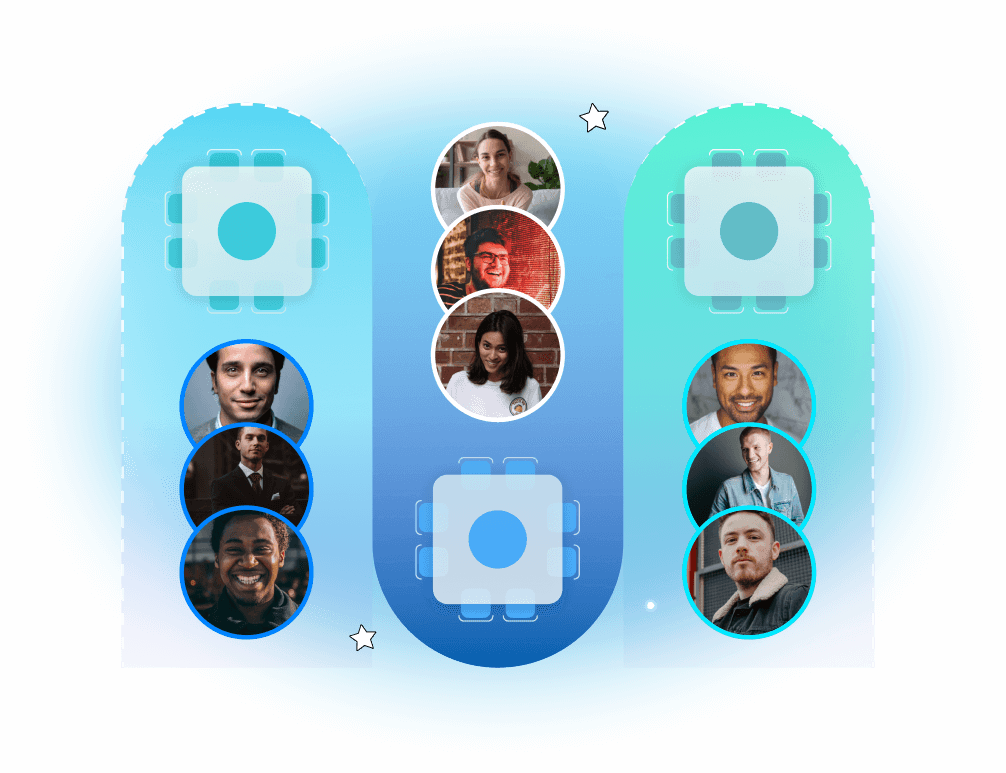
- Run simulation-led sessions through breakouts – AI-driven scenarios often work best in small groups. Airmeet’s breakout rooms let teams practice skills, collaborate, and debrief in a structured yet dynamic environment.
- Deliver interactive onboarding events – Combine live discussions, multimedia content, as well as guided practice to help new employees ramp up faster and also feel connected from day one.
- Facilitate role-play discussions – Managers and employees can rehearse real-world scenarios in safe, moderated breakout rooms — perfect for soft skills, customer conversations, and leadership training.
- Conduct gamified learning experiences – Conduct gamified learning experiences – Airmeet also comes with a variety of engagement features which helps L&D teams convert workshops into challenge-based experiences with tools like – polls, quizzes, leaderboards, along with activities making learning and memorable.
- Provide analytics to track engagement and participation – From attendee interactions to content engagement levels, you can measure the learning impact and refine sessions with Airmeet.
Whether you’re rolling out AI-generated simulations, hosting blended learning experiences, or creating a full-scale virtual training program, Airmeet provides you with all the right infrastructure to bring everything together.
The result: immersive, interactive, and genuinely impactful learning experiences that employees actually enjoy.
Bottom Line
AI-created immersive training is reshaping how people learn at work. It doesn’t replace humans, rather gives people a richer, and a more realistic way to practice, experiment, and eventually grow. When companies pair these AI-driven experiences with the right delivery platform, the result is training that feels engaging, relevant, and worth everyone’s time.
The future of workplace learning isn’t about clicking through slides — it’s about learning through experience, and organizations that embrace this shift will build more confident, capable, and future-ready teams.
FAQs
Not always. While some companies use VR for more advanced experiences, most of elements here include-
- AI-powered simulations.
- Role-plays.
- Scenario-based modules.
All these work via regular laptops or mobile devices. Many tools are web-based, meaning teams can access immersive learning without investing much on hardware.
Absolutely. AI-powered onboarding systems guide new hires in an organization on the company’s culture, workflows, tools, as well as scenarios in a personalized, and an interactive way. Besides, it also helps people feel prepared & supported from day one, rather than overwhelmed with static information.