


Today, the best trade show applications are not optional, but critical platforms that help event organizers function smoothly, exhibitors generate more leads and attendees have meaningful experiences. Whether your event is physical, virtual, or hybrid, the proper trade show mobile app can have a significant impact on your event’s overall outcome.
In this blog, we will cover all you need to know about trade show apps, including how they function, why they are important, and more.
What Are Trade Show Apps?
A trade show app, also known as a trade show mobile app, event app, or expo technology tool, is a software program created expressly to support exhibits, conferences, expos, and trade shows. Unlike generic event websites or printed agendas, these applications are designed to be interactive, mobile-friendly, real-time platforms that drive practically every part of the event experience, via a smartphone or tablet.
A trade show app is essentially a digital event companion. Consider it a central hub that-
- Lists the entire itinerary of sessions and keynotes.
- Displays exhibitor & booth locations.
- Helps attendees develop individual timetables.
- Facilitates networking & meetings.
- Offers tools for lead capture & analytics.
- Enables organizers to transmit real-time announcements.
In a nutshell, it replaces printed schedules, paper badges, paper business cards and manual processes with a seamlessly integrated digital experience that keeps everyone informed & engaged before, during and after the trade show.
Trade show apps are frequently mobile-first, which means they are designed for smartphones with offline capabilities, push notifications and quick interactive aspects. Many of these tools now contain AI-powered capabilities, such as matchmaking recommendations and personalized agendas, that static websites and printed materials cannot provide.
Advanced trade show apps are not only “nice to have.” They replace manual & inefficient tasks with efficient & trackable digital processes; which are supported by real data demonstrating enhanced lead collection, improved engagement, and higher ROI for both organizers and exhibitors.
What Trade Show Apps Include
Modern trade show apps often provide the following important categories of features-
1. Agenda and Scheduling Tools
Attendees can select the sessions they want to attend and receive reminders. Personalized calendars help people stay on track and avoid missed sessions.
2. Interactive Floor Maps and Navigation
Rather than asking for directions or reading printed maps, guests utilize interactive maps to locate exhibitors, refreshment zones, meeting locations, & the other important sections of the event venue. These enhancements reduce confusion & navigation concerns at events by approximately 15%.
3. Networking and Messaging
Instead of hoping to meet the appropriate contacts at random, trade show networking apps frequently allow users to search for relevant attendees, send direct messages and set up appointments, transforming aimless networking into targeted & high-value interactions.
4. Lead Capture Tools
Exhibitors employ QR codes, badge scans, or mobile forms to track prospects in real time. Apps with lead capture capabilities generate more qualified leads than traditional paper techniques.
5. Analytics and Insights Dashboards
These provide hard statistics on the most popular sessions, booth traffic, user navigation patterns and overall engagement—allowing event managers to make data-driven decisions in the future.
6. Push Notifications and Updates
Rather than depending on bulletin boards or public announcements, organizers can communicate important updates or highlight special opportunities immediately, via the app.
Why Trade Show Apps Matter More Than Ever in 2026
Trade show applications have been gaining relevance for years, but 2026 represents a tipping point when they will be regarded as necessary technology rather than optional tools.
Several trends and industry data points support this claim-
1. Trade Shows Are Bigger, More Complex, and More Data-Driven
Trade shows remain a staple of B2B marketing spending. In fact, trade shows account for around 25% of B2B marketing budgets, which is a significant chunk when compared to other channels. Furthermore-
- As per studies, the global exhibition market is worth tens of billions of dollars and is likely to continue rising.
- As per some other studies, trade shows account for around 60% of B2B leads in industries that rely on exhibits.
- The same report suggests that nearly 66% of exhibitors say face-to-face trade show interactions are essential for marketing success.
These figures demonstrate that trade shows aren’t dying; rather, they are evolving, which means organizers & exhibitors require better technologies to manage complex events, and maximize their investment.
2. The Shift Toward Hybrid and Digital Engagement
Since the pandemic, the business landscape simply hasn’t returned to “normal.” Organizers are combining in-person & virtual elements to broaden reach and increase flexibility. Key data points are-
- As per studies referred above, approximately 30% of trade shows are now using hybrid formats that combine in-person and virtual encounters.
- Even as the number of physical events increases, the majority of organizers intend to continue employing virtual components.
- Hybrid events allow organizers to access both local & international attendees at the same time, transforming trade shows into genuinely global platforms.
This hybrid shift necessitates technology that spans both realms, and trade show apps are well adapted to the task. They can deliver live streaming information, enable cross-border networking, and consolidate data from remote & on-site attendees.
3. Mobile Event Apps Drive Measurable ROI
One of the most important reasons trade show apps matter in 2026 is their direct impact on measurable results. Here is what the research shows-
- Studies show that companies that connect lead capturing apps with CRM systems see a 45% increase in sales productivity following an event.
- The same study also reveals that real-time analytics enable exhibitors to optimize engagement methods on the spot, resulting in about 22% more booth engagements.
- As per the same source, trade show lead capture apps eliminate human errors and lost leads, which have historically resulted in approximately 50% of contacts never being entered into a CRM without a digital technology.
In essence, apps are no longer just nice-to-have features; they are essential tools for calculating ROI, managing data, and ensuring post-event success.
4. Attendee Expectations Have Shifted
Today’s trade show attendees are digitally aware professionals who prefer seamless mobile experiences over stacks of paper brochures. Industry trends indicate the following-
- A rising number of event planners employ digital analytics to assess event success.
- Live polls, personalized push notifications, interactive maps and networking tools are all examples of interactive app features that significantly increase attendee participation and satisfaction.
- Gamification & engagement technologies can boost interaction by 44% or more.
Apps are more than just convenience as they provide experiences that attendees value.
5. Artificial Intelligence and Personalization Are Rising Fast
AI is transforming trade show apps, and introducing sophisticated customisation into attendees experiences. Research shows that-
- Nearly half of trade show attendees increasingly prefer AI-powered personalized experiences.
- AI can power content recommendations, matching between attendees and exhibitors, and real-time visitor care through virtual assistants.
- AI-enhanced event solutions can leverage predictive data to reduce no-shows, boost engagement, and optimize event design.
In 2026, the majority of big trade shows are predicted to leverage AI for event planning & guest customisation — making trade show applications smarter, more intuitive and more valuable than old static tools.
6. Sustainability and Cost Efficiency Are Becoming Key Drivers
Trade show apps also contribute to company sustainability goals by substituting printed products such as brochures, agendas, and paper maps with digital ones, which reduce waste.
This is consistent with broader industry trends indicating a greater commitment to environmentally friendly practices and digital transformation.
Best Trade Show Apps of 2026
Here are some of the best trade show apps for 2026 that will help you maximise your trade show experience, and expand your business to its greatest potential-
1. Airmeet
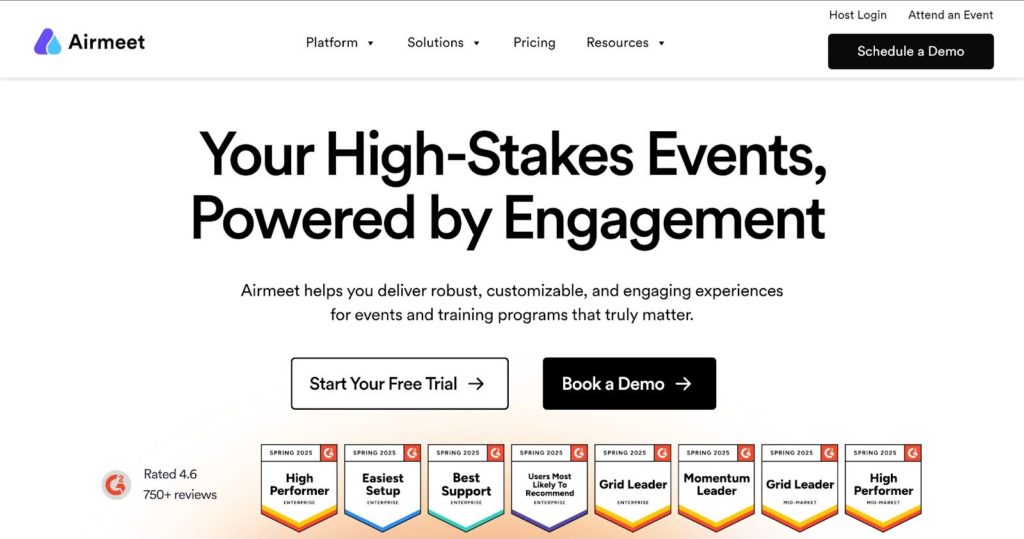
Airmeet is a browser-based platform. It is a modern platform that specializes in trade show and expo management, particularly for virtual and hybrid trade shows. It provides immersive experiences, like networking lounges, configurable booths, live conversations & engagement tools, that rival physical events.
Key features are-
- Virtual and hybrid event support, including live sessions.
- Interactive social lounges and speed networking tables.
- Custom booths with branding, media materials and links.
- Real-time chat, Q&A, polling and engagement interactions.
- Complete analytics for attendance & lead insights.
- Browser-based participation and mobile support.
Pros
- Excellent virtual booth & networking tools.
- Supports big audiences (up to 100,000+ attendees).
- Provides flexible hybrid features like QR check-in, and onsite participation.
Cons
- Mobile app features are growing to include mobile web experiences.
- Organizers who are new with hybrid technology may find it complicated.
Airmeet is best for organizers of big virtual or hybrid trade show experiences that prioritize engagement, networking & data.
2. Whova
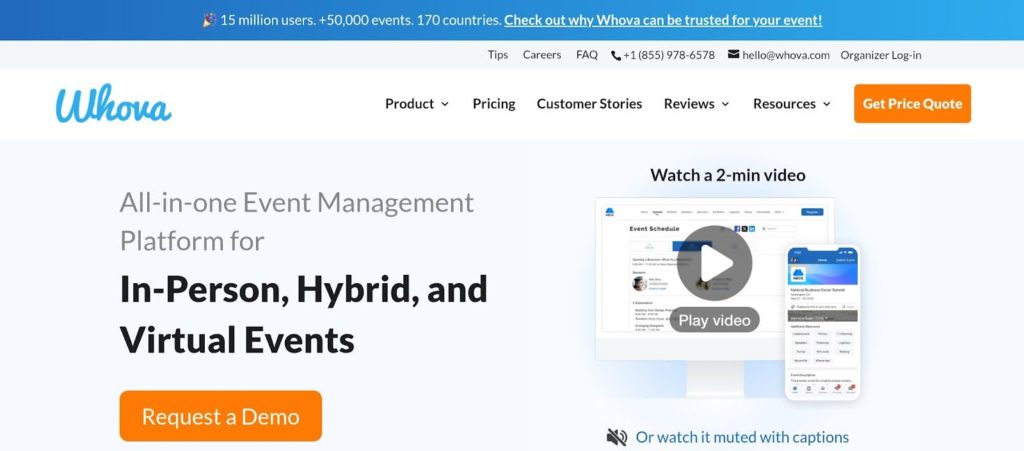
Whova is a reputable trade show mobile app as well as a browser-based app that includes vital elements like scheduling, networking, engagement and lead collection in a single platform. It works equally well for in-person, virtual, and hybrid trade shows, making it a popular option for both event planners and exhibitors.
Key features are-
- Personalized agenda & session scheduling.
- Interactive exhibitor directories and venue maps.
- Community boards, messaging, and networking features.
- QR-based lead capture and badge scanning.
- Live polling and attendee engagement tools.
Pros
- Versatile for both physical and hybrid events.
- Excellent attendee networking capabilities.
- All-in-one features reduce reliance on multiple tools.
Cons
- Some advanced features may require learning time.
- Pricing can increase for larger events.
It is ideal for organizers seeking a comprehensive trade show app that simplifies interaction, lead capture, and attendee experiences.
3. Boomset
Boomset is an event management platform that can be accessed by organizers and attendees using native mobile apps as well as a browser-based web application. Boomset specializes in on-site event operations such as badge printing, check-in, and exhibitor lead capture, which is especially effective at major trade shows where attendance flow and booth engagement are critical.
Some of the key features of Boomset are-
- Fast QR badge scanning and lead capturing.
- On-site visitor check-in and badge printing.
- Real-time exhibitor analytics.
- Attendee flow tracking.
Pros
- Excellent for physical events with large crowds.
- Speeds up entry and lead collection.
- Helps reduce waiting lines.
Cons
- Networking features are not as strong.
- Virtual event support is limited compared to other tools.
Boomset is ideal for large trade shows focusing on efficient check-in, and lead collection.
4. Swapcard
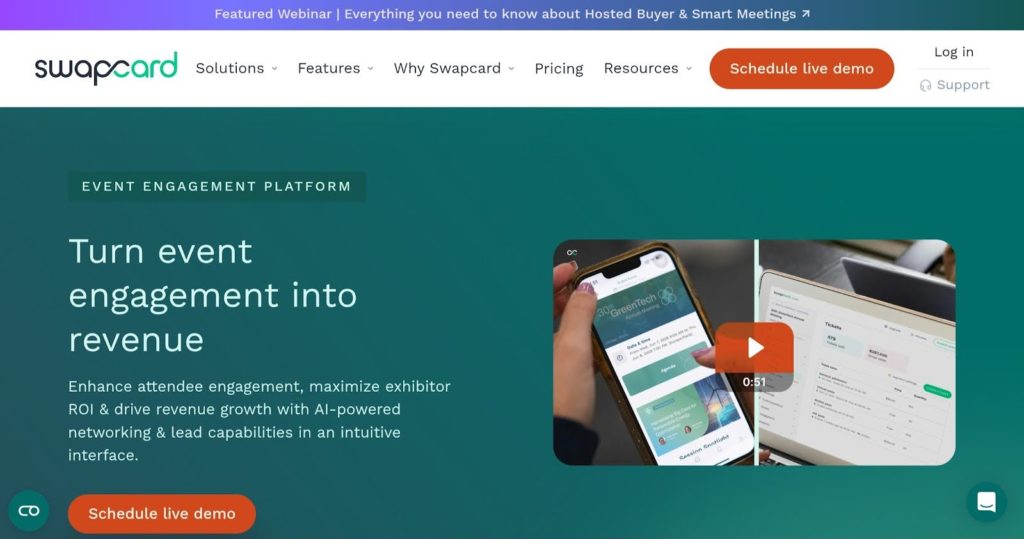
Swapcard is both a mobile app (iOS and Android) and a web app. Swapcard’s AI matchmaking connects relevant attendees, sponsors, and exhibitors, making it one of the most effective trade shows networking apps accessible in 2026. It’s great for business-oriented expos where relationships are key.
Key features are-
- AI-powered matchmaking & recommendations.
- Interactive exhibitor booths and personalized agendas.
- Lead scanning & tracking.
- Community and networking features.
Pros
- Smart connectivity that improves networking quality.
- Built-in lead capture tools.
- Encourages meaningful attendee interactions.
Cons
- AI features may need setup time.
- UI may feel complex initially.
It is best for trade shows where networking, and business matching are important.
5. Eventdex
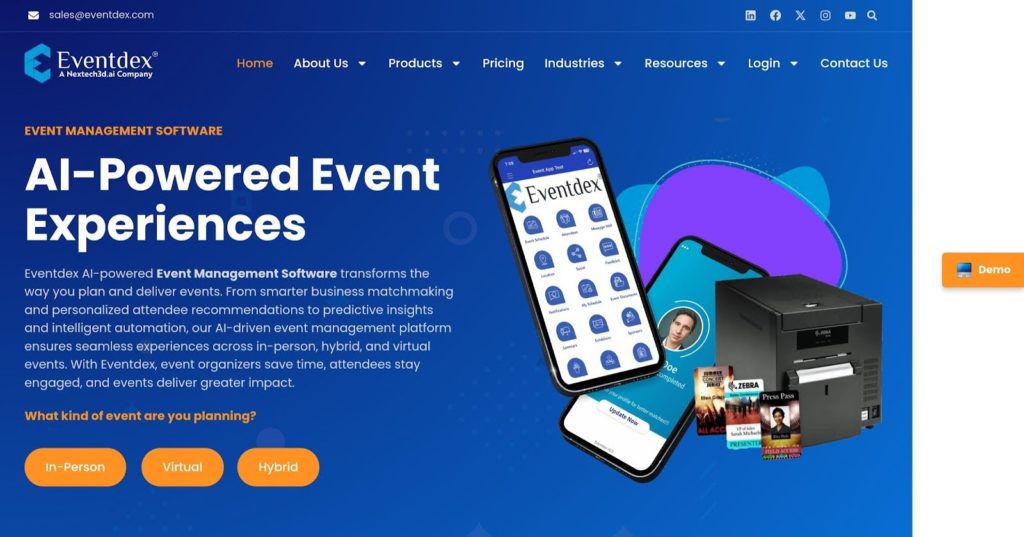
Eventdex is primarily a mobile-first platform, with native iOS & Android apps for attendees, organizers, and exhibitors. However, it also offers browser-based (web) solutions for some features like registration, matchmaking and analytics.
Eventdex focuses heavily on lead capture and CRM integration, which is especially beneficial for exhibitors that require rapid access to lead data, and real-time scoring tools.
It’s key features are-
- Real-time lead capture and CRM sync.
- Lead qualification and scoring.
- Offline scanning support.
- Centralized exhibitor dashboards.
Pros
- Helps exhibitors identify high-value leads quickly.
- Works offline if needed.
- Fast synchronization with sales pipelines.
Cons
- Pricier compared to basic lead tools.
- Simpler user interface without advanced engagement tools.
Eventdex is ideal for exhibitors who require real-time lead scoring and fast CRM integration.
6. iCapture
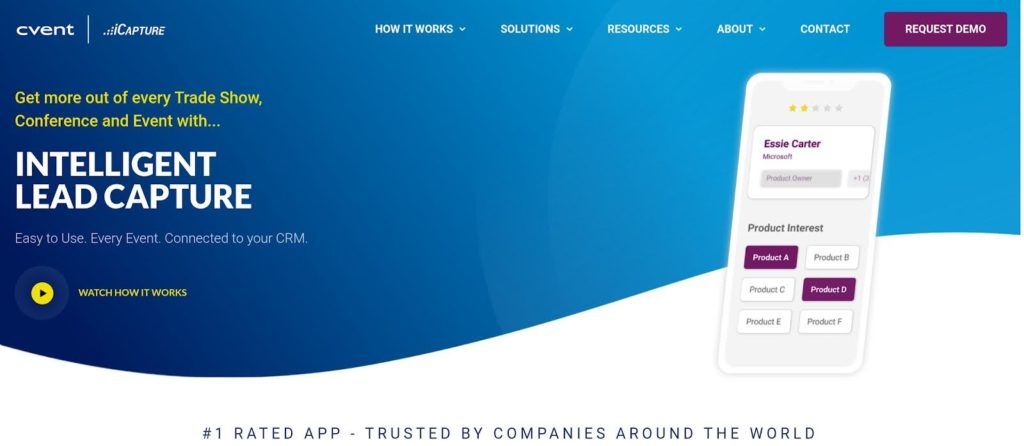
The iCapture platform includes both a mobile app & a web-based admin interface for setup & data retrieval. It is ideal for trade exhibits in places with inadequate connectivity. The platform collects lead information offline, syncs it when connected and then exports it directly to CRM systems, ensuring data reliability & organization.
Key features are-
- Offline badge scanning.
- Custom qualification fields.
- CRM integrating and exporting.
- Note capture alongside lead info.
Pros
- Works without internet & is ideal for challenging venues.
- Clean & simple design.
- Direct CRM exporting.
Cons
- Basic engagement features; not a full networking app.
- Limited advanced analytics.
It is ideal for exhibitors visiting trade shows in low-connectivity environments.
7. vFairs
vFairs provides both a dedicated mobile app (for iOS and Android) for a rich, native experience and a browser-based platform for virtual and hybrid events. vFairs offers one of the most immersive virtual trade show experiences, with 3D exhibition halls and interactive booths. It’s popular among organizers who wish to replicate the experience of a real expo, online.
Some of the key features of vFairs are-
- 3D virtual exhibition spaces.
- Branded booths with media and chats.
- Live and on-demand sessions.
- Networking chat options.
- Detailed engagement analytics.
Pros
- Highly engaging virtual environment.
- Strong analytic reporting.
- Great for global audiences, and remote participants.
Cons
- Setup requires more time.
- Higher cost for full 3D experience.
vFairs is ideal for virtual trade shows where immersion, and audience discovery are top concerns.
8. Hubilo
Hubilo is offered as a browser-based application and a mobile app, providing a varied event experience. It is a well-rounded trade show app for hybrid events, so it works seamlessly whether attendees attend in person or virtually. It focuses on engagement through gamification, conversations, and interactive experiences.
Key features are-
- Gamified activities and engagement points.
- Virtual networking lounges and group chats.
- Live Q&A, polls, and session engagement tools.
- Lead capture and analytics.
Pros
- Strong focus on engagement and interaction.
- Works well across physical and digital audiences.
- Gamification increases participation.
Cons
- Slightly complex setup for first-time users.
- Higher pricing for advanced features.
It is best for hybrid trade shows aiming to provide both onsite, and online experiences.
How Trade Show Apps Help Maximize Event Potential
The primary purpose of using the top trade show apps in 2026 is to maximize potential. This entails maximizing value for all parties involved.
Let’s break it down.
For Event Organizers
Trade show apps assist organizers-
- Manage schedules & sessions easily.
- Make real-time announcements.
- Control the check-ins & registrations.
- Track attendee behavior.
- Evaluate event success.
For example, instead of guessing which session was most popular, organizers may view specific attendance data within the app. This leads to better planning, happy attendees & increased sponsor satisfaction.
For Exhibitors
Exhibitors profit in extremely practical ways-
- Scan QR codes rather than collecting traditional paper cards.
- Capture lead data instantly.
- Add notes after chats.
- Measure booth traffic.
- Follow up faster.
Companies that use exhibitor management software can readily observe how the event helped them achieve their sales and marketing objectives.
For Attendees
Attendees use trade show applications for-
- Discovering relevant booths.
- Scheduling meetings.
- Networking with people who have similar interests.
- Getting reminders and updates.
- Navigating the venue easily.
This makes the event feel more personal & useful, rather than overpowering.
Conclusion
The future of trade shows is interconnected, data-driven, and people-oriented. The best trade show apps for 2026 are more than simply tools. They are experiential platforms that connect organizers, exhibitors, and visitors in meaningful ways.
As technology advances, trade show applications will play an increasingly important part in determining how events succeed. If you want to increase engagement, networking and ROI, investing in the proper trade show app is one of the best moves you can do.
Frequently asked questions
Interactive features such as live polls, Q&A sessions, gamification, push notifications and tailored agendas help trade show attendees participate more actively. Attendees may quickly find relevant seminars, exhibitors, and networking opportunities. This keeps customers engaged throughout the event, increasing happiness, session attendance and overall value of the trade show experience.
Yes, modern trade show apps-
- Increase audience engagement.
- Streamline event management.
- Allow exhibitors to analyze ROI more accurately.
Trade show apps, with capabilities like QR code lead capture, AI-powered networking, real-time analytics and hybrid event support, provide measurable economic value in addition to traditional in-person approaches.
Trade show lead capture tools enable exhibitors to create more leads by replacing manual data collecting with digital badge scanning, QR codes and bespoke qualification forms. These tools enable exhibitors to rapidly collect accurate attendee data, add notes, score leads and integrate data with CRMs. This leads to speedier follow-ups, increased conversion rates and improved post-event sales performance.