




If you’re a B2B marketer, you already know the drill; you spend weeks arranging a webinar, advertising it across channels, and coordinating speakers. The live event goes well, attendees ask excellent questions, and suddenly it ends. The recording is saved in your video library, and you may send it out as a follow-up email.
But what if that webinar could keep working for you?
On-demand webinars flip the traditional model. Instead of limiting your audience to people who are available at a scheduled time and date, you offer content that prospects can access whenever it is convenient for them. This flexibility does more than just expand reach; it fundamentally alters how webinars fit into your demand generation plan.
What is an On-Demand Webinar Platform
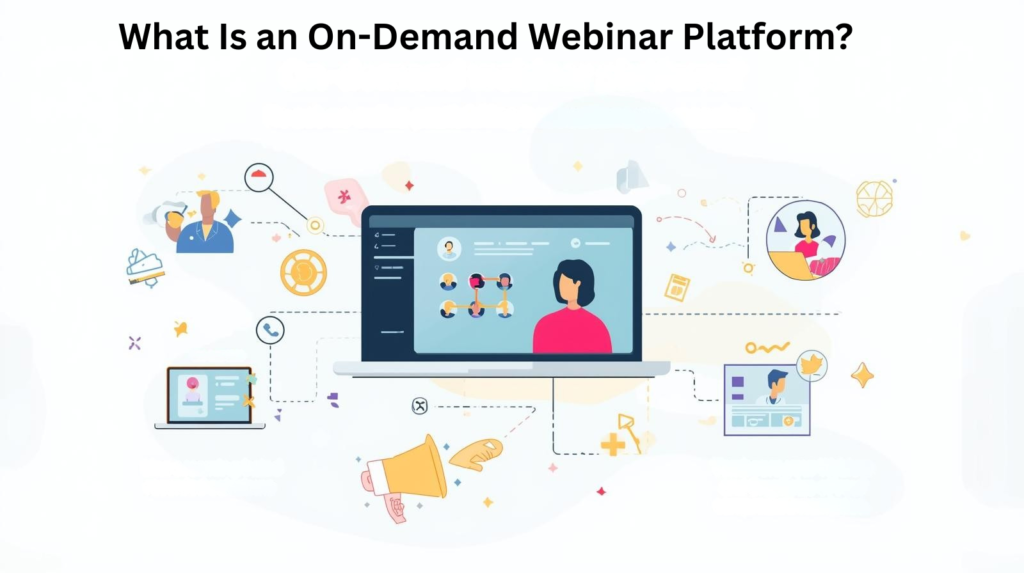
An on-demand webinar platform is a software that hosts pre-recorded webinar content. It also makes the content available to viewers at any time or date they are available to go through it. Unlike live webinar tools that focus only on real-time events, these platforms specialize in creating evergreen content experiences. As a result, it continues generating leads long after the initial recording.
The best on-demand platforms go beyond simple video hosting. They provide registration workflows, viewer analytics, engagement tools, and integrations with your marketing stack, giving you the data and automation you need to turn passive viewers into qualified leads.
Think of it as the difference between a one-time concert and a streaming service. Both have value, but one keeps delivering results month after month.
Why are B2B Marketers Prioritizing On-Demand Webinars?
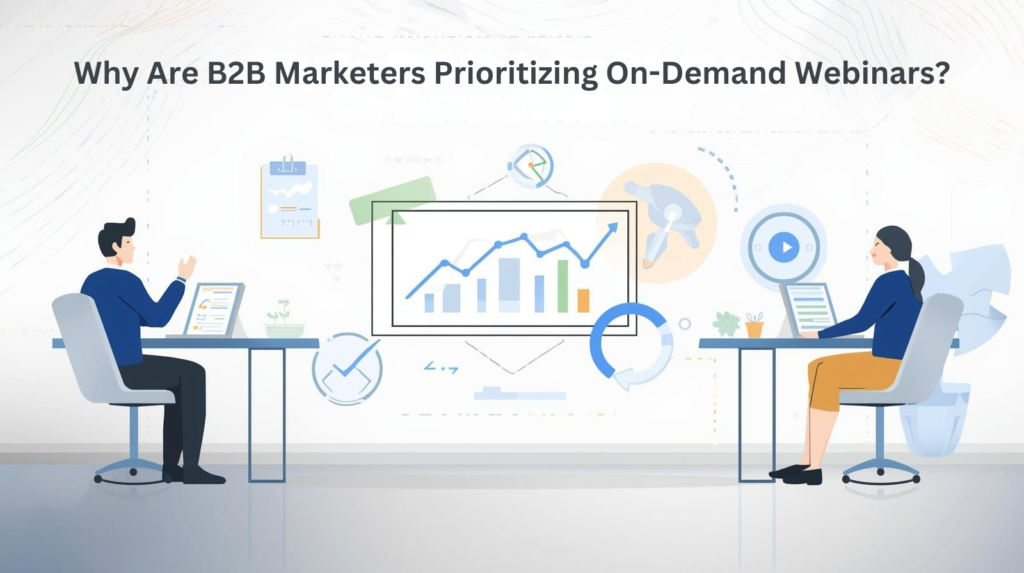
The numbers tell a compelling story. According to research, 73% of B2B marketers identify webinars as the most effective strategy for generating quality leads. But here’s what makes on-demand formats particularly powerful: 84% of attendees say that having access to on-demand webinars increases their viewing time.
This shift makes sense when you consider the B2B buying journey. Decision-makers are researching solutions-
- Across multiple time zones.
- Squeezing self-education into early mornings or late evenings.
- Comparing vendors on their own timeline.
On-demand webinars solve many persistent challenges that B2B marketers face-
Global reach without timezone complications
Your prospects in Singapore don’t need to wake up at midnight to learn about your solution. They access the content when it makes sense for their schedule, which means higher actual viewership compared to live attendance rates.
Content that compounds in value over time
A single well-produced webinar can generate hundreds of leads over months or even weeks. This evergreen content builds momentum as more prospects discover and engage with it across different channels. Each new viewer adds incremental value without requiring additional effort from your team. As interest compounds, the webinar becomes a long-term asset that continually educates people, nurtures, and qualifies leads on autopilot.
Better lead nurturing opportunities
When someone watches your on-demand webinar, you can track exactly which sections they viewed, how long they stayed engaged, and whether they clicked through your calls-to-action. This behavioral data tells you far more about buying intent than a simple registration form ever could.
Lower production pressure might lead to higher quality output
Without the pressure of a live broadcast, you may not correct your mistakes, improve your messaging or guarantee that every minute adds value. This does not imply compromising authenticity — instead it implies valuing your audience’s time by delivering your best work.
How On-Demand Webinars Drive Pipeline Throughout the Buyer Journey
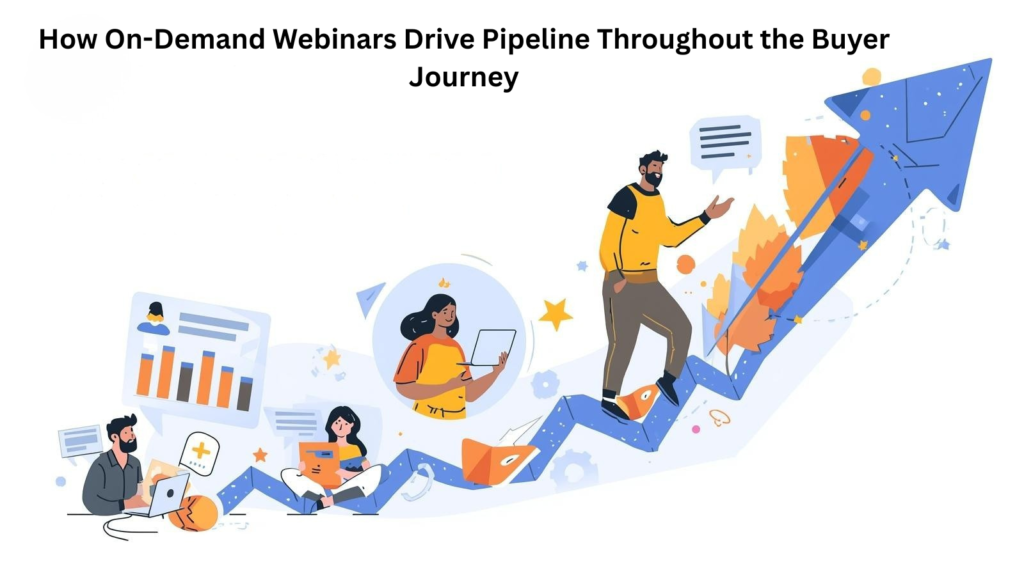
Most B2B companies think of webinars as top-of-funnel awareness tools. That’s selling the format short. On-demand webinars work at every stage of the customer journey because they provide the right depth of information whenever the prospects need it.
Awareness stage: Building brand authority
At the top of the funnel, prospects are identifying problems and are also exploring potential solutions. They’re asking “why” questions, and are also looking for educational content that helps them understand their challenges better.
Your on-demand webinars can position your company as a trusted resource by addressing these fundamental questions. When someone searches “how to improve software adoption rates” and finds your thoughtful webinar on change management strategies, you’ve started building a relationship before they even know your product exists.
The key here is focusing on education over promotion. You can share insights, industry trends, and practical frameworks that will help the viewers regardless of whether they eventually buy from you or not. As a result, it establishes authority, and creates the foundation for trust among all the viewers.
Consideration stage: Demonstrating differentiation
Prospects in the middle of the funnel understand their problem, and are assessing potential solutions. They want to learn how different techniques function in practice & what outcomes they may anticipate.
This is where use-case webinars shine. Show real implementations, walk through customer success stories, and explain your methodology in detail. The on-demand approach works especially well here because prospects may pause, review complex passages, and share relevant portions with other stakeholders.
Unlike written case studies, webinars let prospects-
- Hear directly from customers
- See your solution in action
- Get a feel for how your team thinks about problem-solving.
This deeper engagement helps qualified leads to self-select into your pipeline.
Decision stage: Addressing final objections
Bottom-funnel prospects are comparing final options & are working through implementation concerns. They need more detailed information about capabilities, integration requirements, and what the onboarding process looks like.
At this stage, product demos and technical deep-dives work exceptionally well as on-demand content. Prospects can-
- Watch these sessions multiple times
- Share them with technical evaluators
- Reference specific features during internal discussions.
This self-service approach actually accelerates deal velocity because prospects can get answers without waiting for another sales call.
Key Features to Look for in an On-Demand Webinar Platform
Not all on-demand webinar platforms are built in the same way. As you evaluate the options available for you, focus on capabilities that directly impact your ability to generate, and convert leads.
Instant replay and easy access
The platform should generate on-demand versions of your live webinars without requiring any kind of manual work or delays. So, look for systems that generate instant session replays, which viewers can access as soon as the live event ends.
Flexible access control is also essential. To collect lead information, you must be able to gate content behind registration forms—making it easy for registrants to view the content easily. Complex login processes or many authentication steps reduces the conversion rates.
Registration and landing page customization
Your on-demand webinar;s landing page is often the first impression prospects have of your brand. The platform should provide you with customizable registration forms where you can collect the specific information that your sales team requires, whether that’s company size, role, current tools, or specific pain points.
Progressive profiling capabilities are particularly valuable if you are running multiple webinars. Instead of asking returning visitors the same questions repeatedly, the system should recognize them, and ask for different information each time; gradually building a complete profile without creating form fatigue.
Engagement tracking and analytics
This is where on-demand platforms separate themselves from basic video hosting platforms. You need granular visibility into viewer behavior-
- Which sections did they watch?
- Where did they drop off?
- What did they click on?
- How long did they engage with the content?
Modern webinar platforms offer personalized viewer timelines that demonstrate how each prospect has participated with your webinar. This data should be integrated into your CRM immediately after the webinar is finished so that the sales teams may view engagement history with other touchpoint information. When a lead views 85% of your product demo webinar, your sales team should be made aware of it immediately.
Real-time analytics dashboards help you understand content performance across your entire webinar library-
- Which topics drive the most registrations?
- What content keeps viewers engaged longest?
- Where do people typically drop off?
These insights will help you in optimizing both the existing content as well as the future webinar topics.
Interactive elements that work on-demand
Just because content is pre-recorded doesn’t mean it should be passive for the viewers. Hence, look for platforms that support interactive elements like-
- Clickable calls-to-action
- Resource downloads
- Simulated Q&A where viewers can see common Q&A integrated into the viewing experience.
Dynamic calls to action are extremely effective. These enable you to display different offers or next steps depending on where viewers are in the webinar. Someone watching the opening may notice a CTA to download a related guide, whereas someone nearing the end may be prompted to book a demo.
CRM & Marketing Automation Integration
Your on-demand webinar platform needs to speak the same language as the rest of your marketing stack. Native integrations with platforms like HubSpot, Salesforce, and Marketo ensure that the registration data, viewing behavior, and engagement metrics flow automatically into your systems without requiring any kind of manual exports or data entry.
This integration enables sophisticated follow-up workflows.
- Someone who registers but doesn’t watch can receive reminder emails.
- Someone who watches some part of your webinar might get content that is addressing common early objections
- And, someone who watches the entire webinar and clicks your demo CTA should trigger an immediate notification to sales.
Content hub and series management
As you build your on-demand webinar library, organization becomes critical. The platform should provide a branded content hub where prospects can browse your full catalog. It should have features like search, filtering by topic, and recommended content based on what they have already watched.
Series management is equally important. If you’re running a multi-part educational program or a sequence that takes prospects from beginner to advanced topics, you need the ability to organize content accordingly, and automatically enroll viewers in the full series.
How Airmeet Turns Webinar Recordings Into Revenue Engines
When you’re evaluating on-demand webinar platforms, the technical checklist matters. But what really determines success is how well the platform helps you convert viewers into pipeline.
Airmeet approaches on-demand webinars with a specifically B2B mindset. The platform extends webinar shelf-life with instant session replay and event replay hubs. When a live session ends, the recording becomes available almost immediately. You can create event replay hubs that aggregate multiple recordings into an organized on-demand experience with access controls, giving prospects a self-service library they can explore at their own pace.
This immediate availability means you can promote on-demand access to people who registered but didn’t attend, share recordings with new prospects the same day as your live event, and keep generating leads from content without waiting for production turnaround times.
The platform handles the production side with features that streamline polished output. The backstage area gives hosts & speakers a private space to test the audio, video, and content before they go live. You can rehearse, coordinate timing, and ensure quality without the chaos of having any kind of troubleshooting during your live broadcast. Hosts can bring attendees to stage for live Q&A and manage raise-hand interactions—creating authentic moments that don’t feel overly scripted when watched on-demand later.
For organizations that want to maximize reach, Airmeet maximizes distribution through RTMP capabilities. You can stream into Airmeet from professional tools like OBS or vMix, giving you full production control for high-stakes content. More importantly, you can simultaneously stream out to YouTube, Facebook, or custom RTMP endpoints. This lets you meet prospects where they already spend their time, broadcasting live to social media channels while still capturing engagement data for leads who register through your Airmeet landing page.
Nonetheless, technical capabilities only matter if you can prove ROI to leadership. That’s where Airmeet’s AirIntel analytics make the difference. Beyond basic viewing metrics, you get event intent scores that identify the following-
- Which prospects showed the strongest buying signals.
- ROI trackers that connect webinar engagement to pipeline and revenue.
- Activity timelines showing exactly how each lead progressed through your content.
These data insights are fully integrated with your CRM—allowing sales teams to prioritize follow-up based on actual involvement rather than speculating who may be interested.
Creating On-Demand Webinars That Actually Convert
Having the right platform is only half the equation. The content itself determines whether people watch and whether they take action afterward.
Choose topics that solve real problems
The most successful on-demand webinars address specific challenges that your prospects face, not generic industry trends or product features disguised as education. Hence, start by talking to your sales team about the questions they hear repeatedly. Look at support tickets to understand common confusion points. Review win/loss analyses to identify the concerns that stall deals.
Your topic should make someone think “that’s exactly what I’m struggling with” within the first 30 seconds. Generic titles like “Best Practices for Digital Transformation” don’t create that reaction. Specific angles like “How to Get Executive Buy-In for Your Martech Stack Consolidation Project” do.
Structure content for scannable viewing
People watch on-demand content differently than live events. They skip ahead, they jump back to clarify points, and they abandon ship if the first few minutes don’t hook them. Your content structure needs to accommodate these behaviors.
Start with a clear agenda that shows exactly what viewers will learn and when. Break content into distinct chapters or segments that are easy to navigate. Include visual cues when you’re transitioning topics so viewers can find specific sections if they return later.
Most importantly, consider the front-load value. Don’t leave your best insights till the end. Give your viewers something beneficial in the first five minutes to justify the time they are investing in your webinar. You can always progress to more advanced stuff, but you must first gain their continuing attention.
Keep it focused and actionable
Longer isn’t better with on-demand webinars. Research on viewing behavior suggests that shorter formats often perform better for pre-recorded content. While live webinars benefit from being at least 30 minutes to justify the time commitment, on-demand sessions can be more concise.
Aim for content that delivers one big idea with supporting examples and practical takeaways. If you find yourself trying to cover five major topics, you probably need five separate webinars instead of one overstuffed session. Viewers will appreciate tight, focused content they can actually finish over sprawling presentations they abandon halfway through.
Include clear calls-to-action throughout
Every webinar should have a clear next step, but don’t wait until the end to mention it. Weave calls-to-action throughout your content in contextually appropriate moments.
When you explain a complex challenge, offer a downloadable framework that helps viewers apply the concept. When you mention a specific capability, provide a link to learn more or see a demo. When you reference customer results, make it easy for viewers to read the full case study.
The key is making these CTAs helpful rather than pushy. You’re giving viewers tools to take action on what they’re learning, not interrupting education with sales pitches.
Promoting Your On-Demand Webinar Library
Creating great on-demand content means nothing if prospects don’t know it exists. Your promotion strategy should treat on-demand webinars as perpetual assets, not one-time campaigns.
Leverage email marketing strategically
Your email database is still one of the most effective channels for promoting on-demand webinars. But the approach differs from promoting live events.
Send an announcement for new webinars emphasizing the convenience of on-demand access as well as the unique benefits viewers will receive from your webinar. Do not create any false sense of urgency around a recording that will remain available indefinitely. Instead, emphasize why the topic is relevant right now.
For your existing webinar library, incorporate on-demand content into nurture streams based on prospect behavior and interests. Someone who downloaded a guide about change management might be interested in your webinar about driving user adoption. Someone who attended your intro webinar should receive an invitation to watch the more advanced follow-up.
Segment your database thoughtfully. The webinar that resonates with a CFO is probably different from what appeals to a marketing manager. Match content to role, industry, and stage of the buying journey rather than blasting your entire list with every new webinar.
Optimize for organic search
On-demand webinars can attract visitors from search engines, but only if you optimize the landing pages properly. Start with descriptive, keyword-rich titles that reflect what people are actually searching for. “Account-Based Marketing Strategies for Enterprise SaaS” will attract search traffic. “ABM Excellence Webinar” won’t.
Write detailed descriptions that explains-
- What does the webinar cover?
- Who is it intended for?
- What specific takeaways viewers will acquire from it?
Include relevant keywords naturally, but prioritize being genuinely helpful above manipulating algorithms. Search engines are pretty good at distinguishing useful content from keyword stuffing.
Consider writing blog posts, which summarize the main concepts from your webinars and embedded video or links to the registration page. This increases the number of indexed pages, makes the material more discoverable through related queries, and offers context that clarifies the value proposition.
Use social media to extend reach
LinkedIn remains the dominant platform for B2B webinar promotion, but your approach should go beyond posting a link with “check out our webinar” copy.
Share specific insights or quotes from the webinar as standalone posts and then refer interested readers to the whole recording of the webinar for more information. Create short video clips emphasizing particularly useful aspects and use them as social media content to drive visitors to the entire webinar.
Encourage speakers & attendees to share about the webinar with their networks. Employee advocacy and speaker promotion frequently exceed official company posts due to higher engagement levels in their personal networks. Make this easier by giving shared templates, and pre-sized graphics for them to utilize.
Consider running targeted LinkedIn ads to promote high-performing webinars to specific audiences. If you know a particular piece of content resonates with VPs at mid-market technology companies, you can reach more of that audience through paid promotion.
Integrate into sales conversations
Your on-demand webinar collection should be a typical tool for sales engagements. When a prospect inquires about a certain capability or raises a typical complaint, sales representatives should know which webinar solves the issue and be prepared to offer it.
Create a simple guide for your sales team that maps webinars to common scenarios. “Prospect is concerned about implementation timeline” links to your webinar about rapid deployment strategies. “Prospect is comparing us to Competitor X” links to your differentiation webinar. Make it easy for sales to find and share the right content at the right moment.
This approach serves all the prospects who want to do independent research before committing to more sales conversations, and it helps sales teams provide value beyond their standard pitch.
Making Your On-Demand Webinar Strategy Work
The shift to on-demand webinars isn’t about replacing live events. Both formats serve important purposes in B2B marketing.
Live webinars-
- Create energy.
- Enable real-time interaction.
- Generate FOMO that drives attendance.
On-demand webinars-
- Provide flexibility.
- Extend content lifespan.
- Accommodate how modern buyers actually research solutions.
The most effective strategy combines the two. Use live events to create intriguing content and drive quick engagement. Then, to maximize the value of that investment, make recordings available on demand with the appropriate advertising, registration, and follow-up workflows to convert them into ongoing lead generating assets.
Success requires choosing a platform that supports this hybrid approach without forcing you to manage multiple systems or manually bridge the gap between live & on-demand experiences. So, look for solutions that automate the transition, maintain viewer data across both formats and provide the analytics you need to optimize both live & on-demand performance.
When you get this right, your webinar program becomes a compounding asset. Each new webinar you create adds to a library that works 24/7 to educate prospects, generate leads, and support sales conversations. The effort you invest in production multiplies as the same content delivers value to audiences across time zones, industries, and buying stages for months or even years.
That’s when on-demand webinars transform from a content tactic into a genuine pipeline driver that scales with your business.
FAQs
An on-demand webinar platform lets you publish recorded webinars that prospects can watch whenever it fits their schedule. For B2B marketers, this is a big win because the content keeps working long after the live session ends. Instead of a one-time event, your webinar becomes an always-available resource that attracts leads and supports sales conversations without extra effort.
Here are a few features you should look for when choosing an on-demand webinar platform-
- Instant replay options so that the recordings are available right after your live session finishes.
- Customizable landing pages that will help you in boosting your registrations.
- Detailed viewer analytics to understand who’s actually interested in your webinar.
- Native CRM or automation integrations for smoother lead follow-up.
- Interactive CTAs & resources that guide viewers toward the next step they should take.
These essentials make it easier to turn webinar recordings into a steady stream of qualified leads.
Once a webinar goes on-demand, it becomes a digital asset for the company that never clocks out over time. People discover the content either through search, email nurtures, or social posts and can register for it anytime. With built-in tracking and CRM integrations, every view turns into useful intent data for marketing and sales. This makes on-demand webinars a reliable way to generate leads 24/7.